
Last updated September 23, 2026
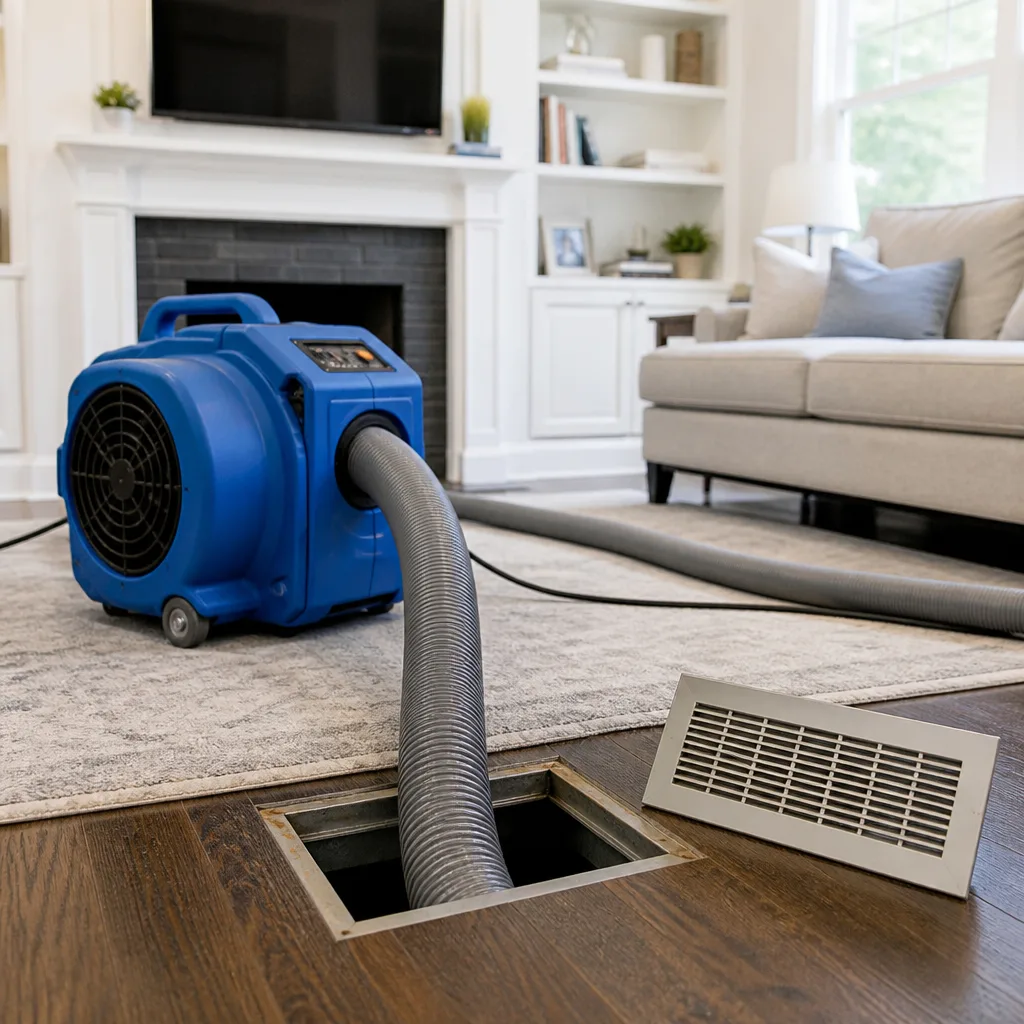
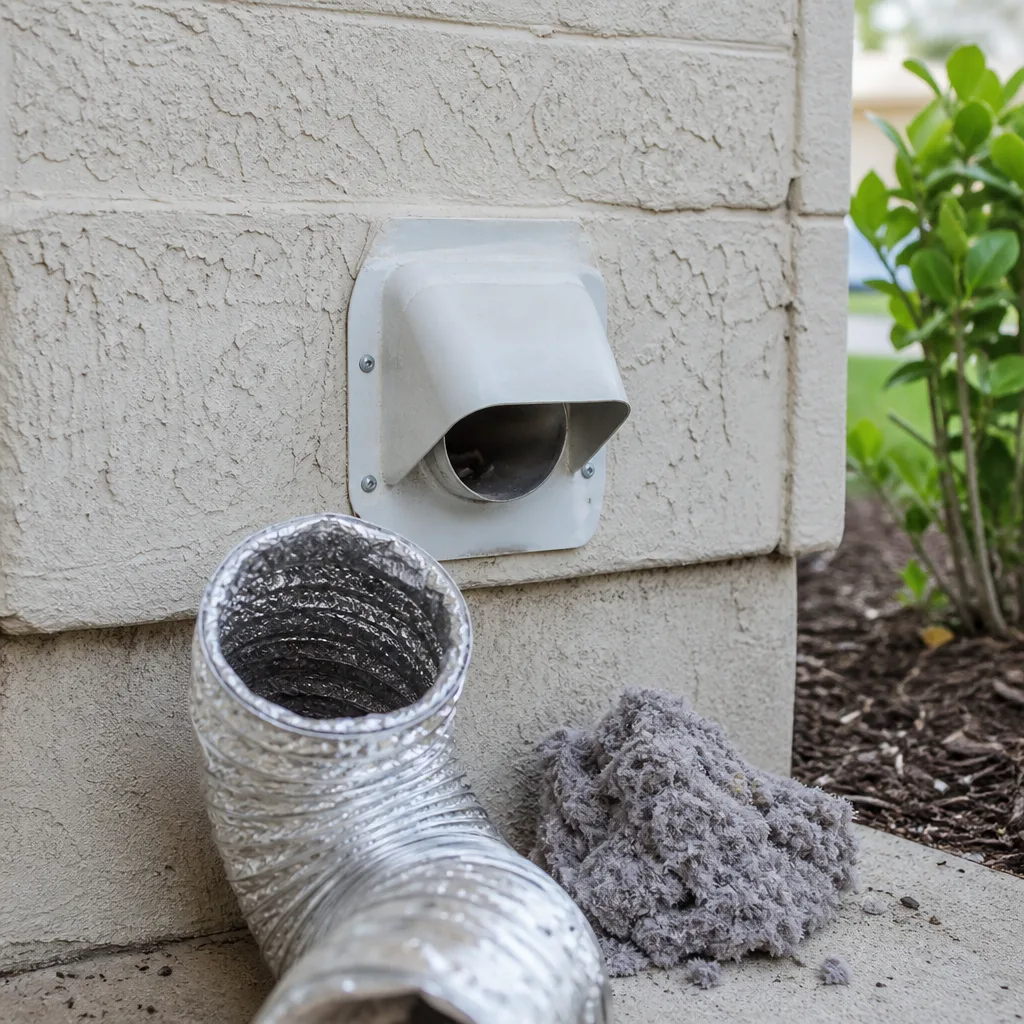
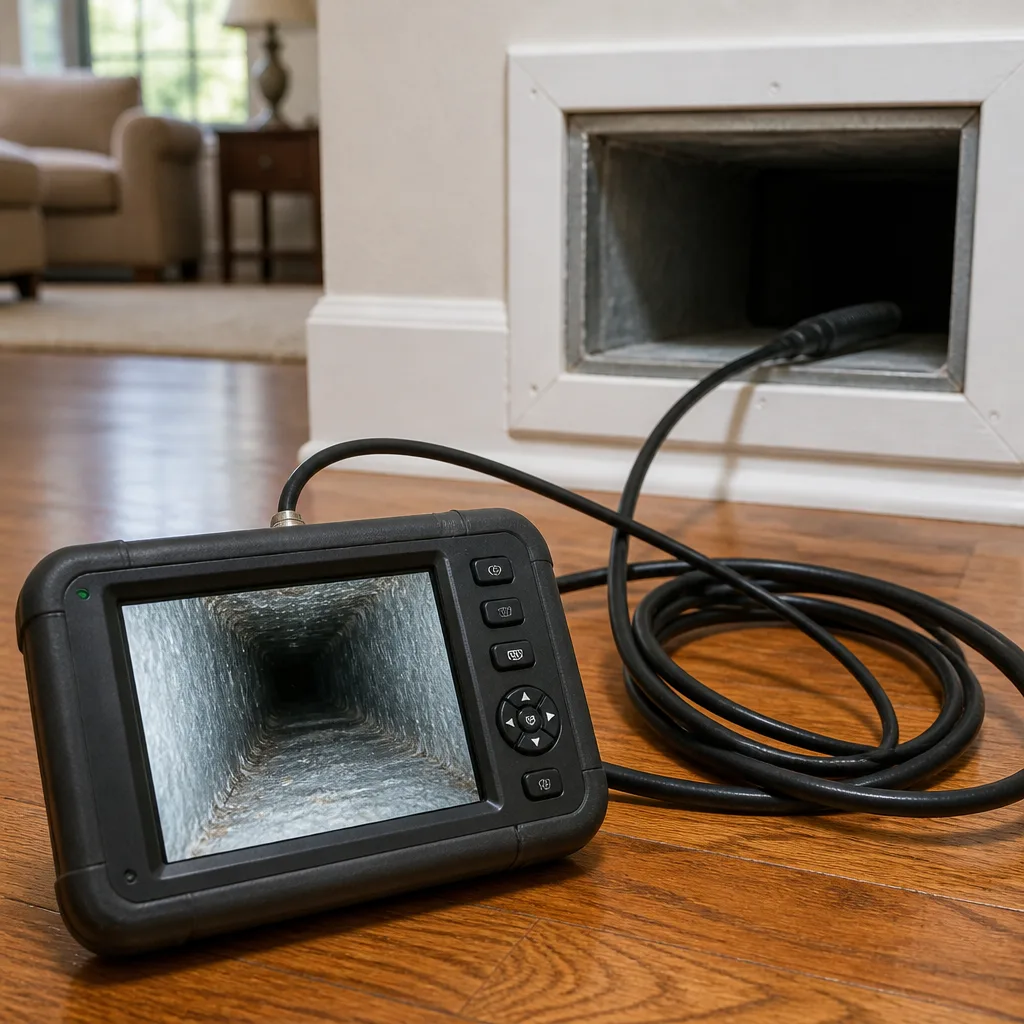
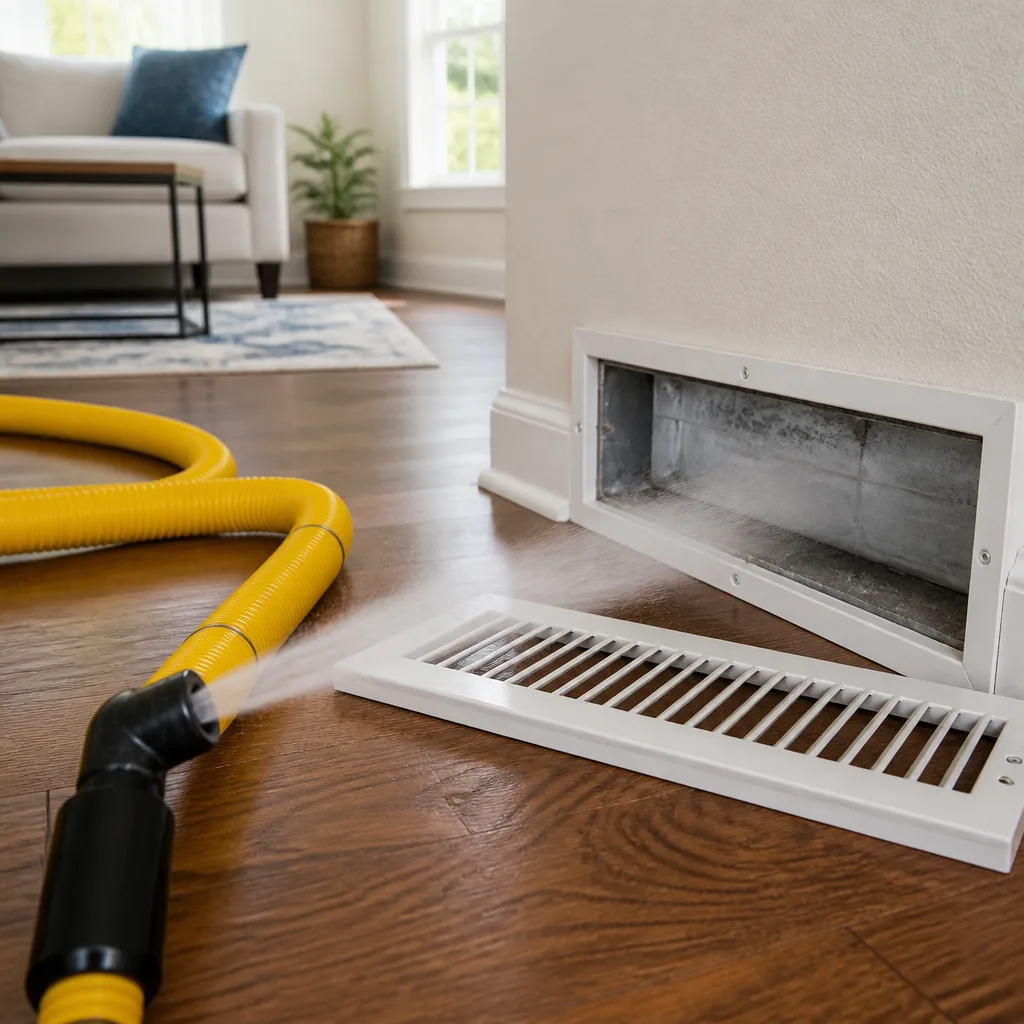
Whole-system duct and dryer vent check with before-and-after photos - you see exactly what came out of your vents
That "$99 whole-house special" is a bait ad - the real number appears once they are in your hallway, or the "clean" is a shop-vac at the register. We photograph the inside of your ducts before and after instead.
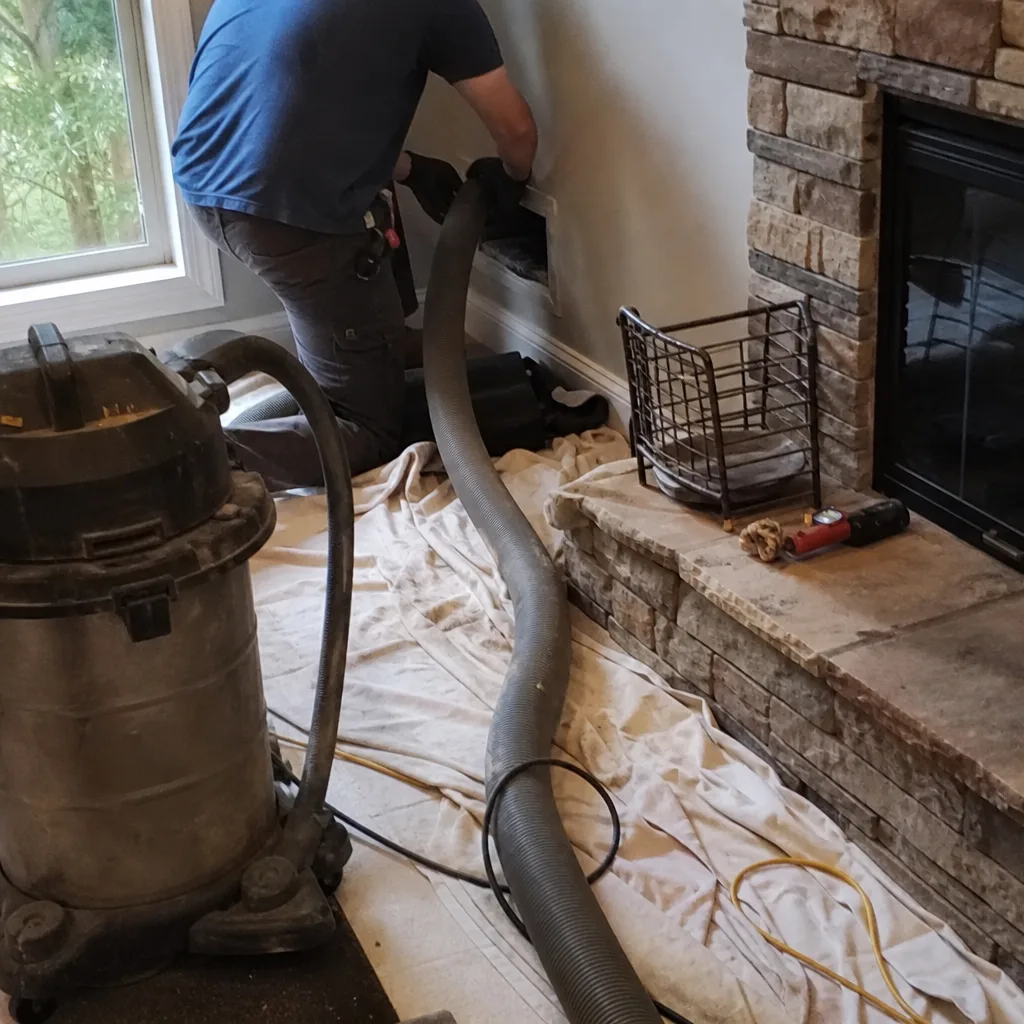 Before
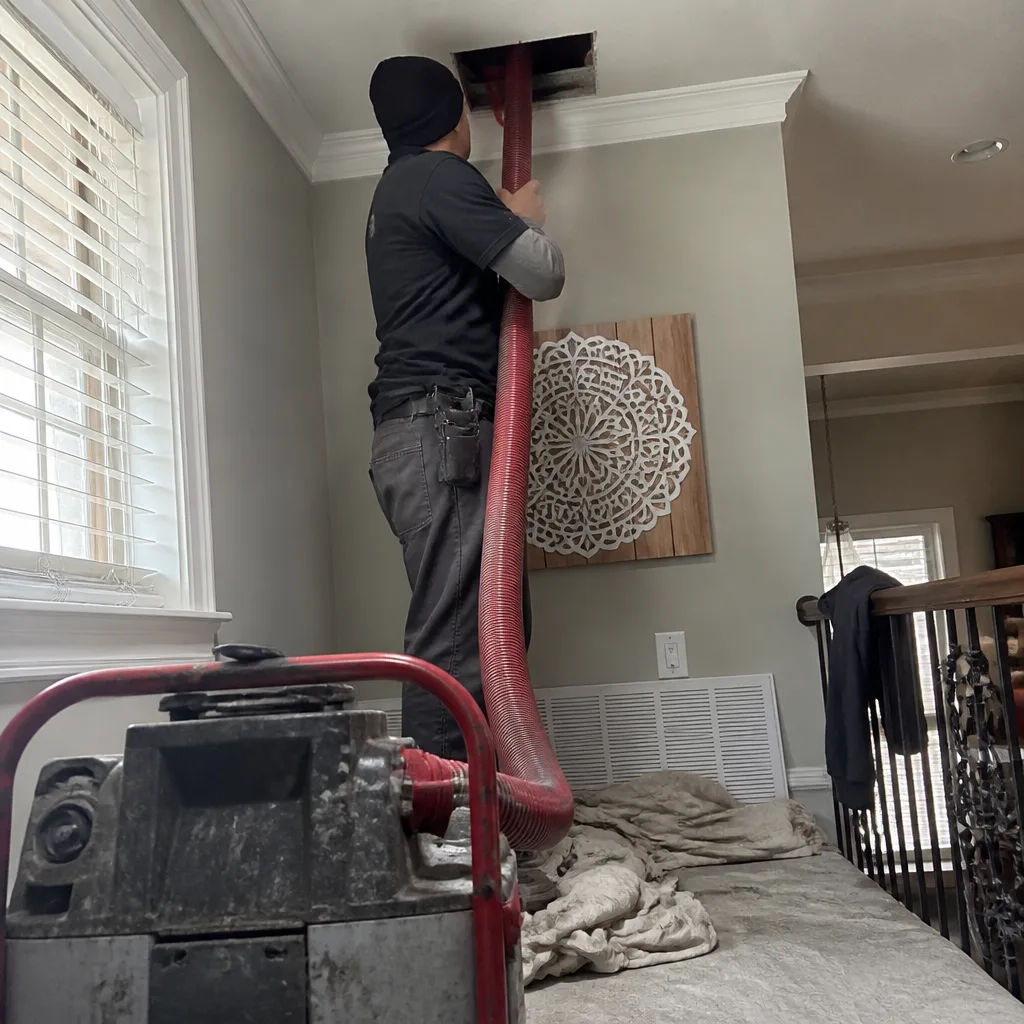 After
After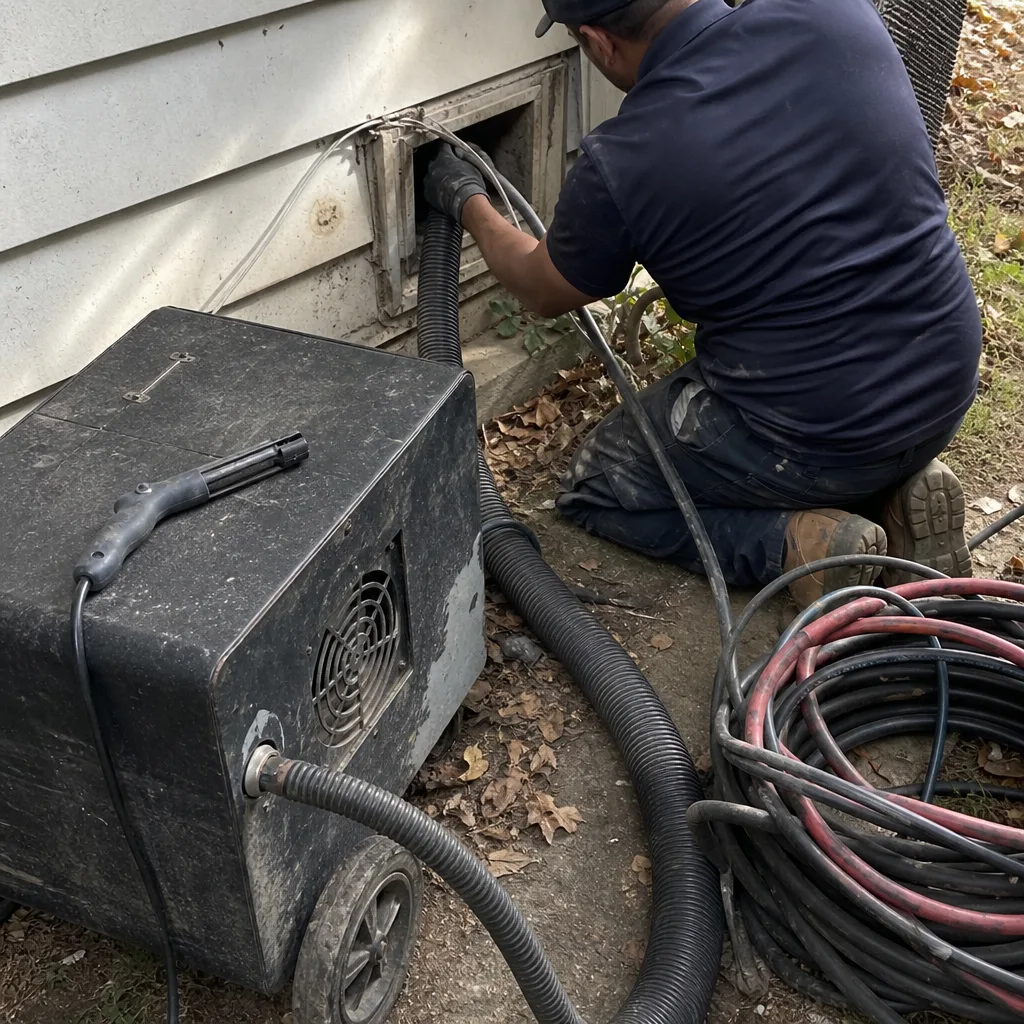 Before
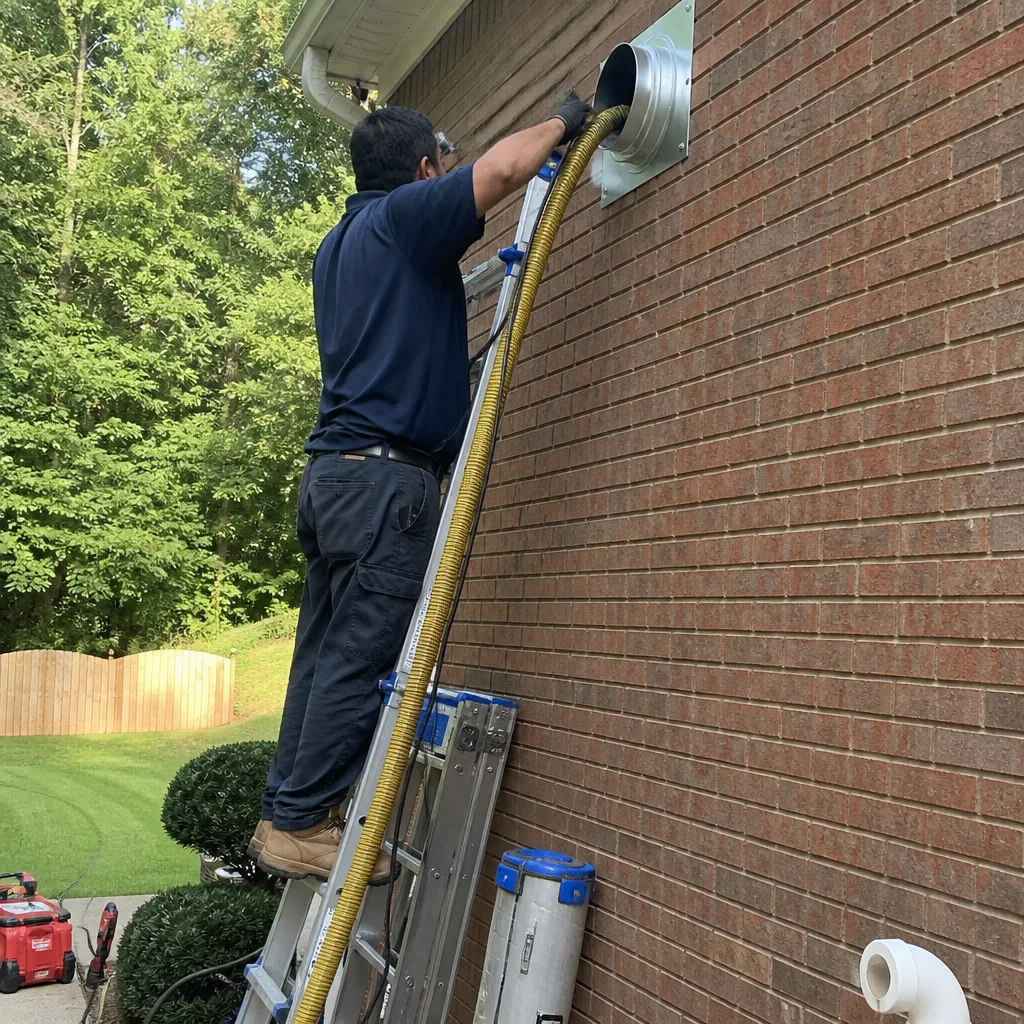 After
After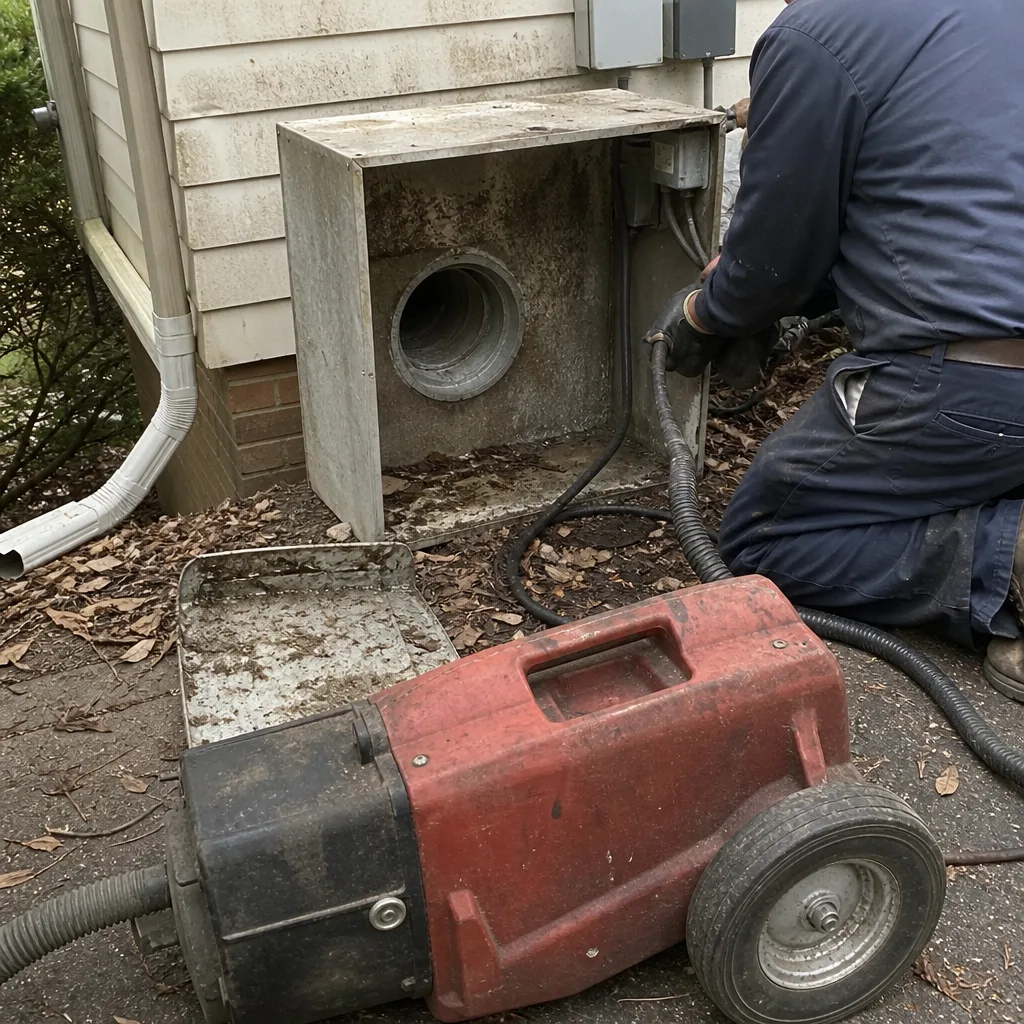 Before
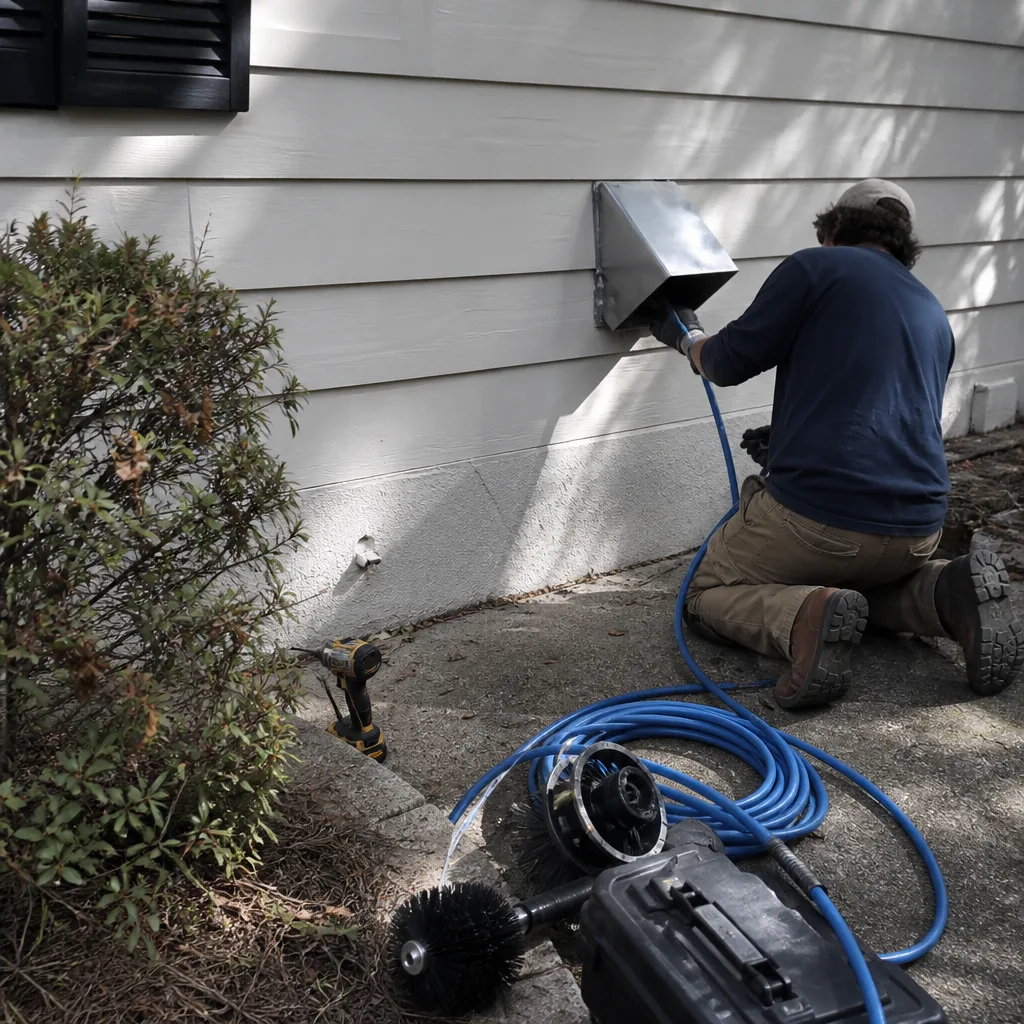 After
AfterAir Duct Cleaning Maintenance Checklist for Johns Creek Homeowners
Most maintenance checklists tell you to change filters and call a pro every three years. Neither instruction tells you what to actually look for or how to document it, which means you’re flying blind when a contractor hands you a quote. Johns Creek homeowners face a specific set of conditions - summer humidity that peaks above 80 percent from June through September, heavy spring pollen loads from oak and pine, and construction-era flex duct in neighborhoods like Medlock Bridge and St. Ives that degrades faster than hard pipe. A useful checklist isn’t a reminder to schedule our Air Duct Cleaning services. It’s a systematic record of what your HVAC system looks like over time, so you have evidence-based grounds for every decision you make about it. This guide builds that record-keeping habit around the specific conditions Johns Creek’s climate creates.
Quick Answer
A complete air duct maintenance checklist for Johns Creek homeowners includes monthly filter checks using visual and airflow benchmarks, semi-annual register and return inspections photographed for comparison, and annual assessments of accessible ductwork, the air handler, and outdoor condenser coils tied to the region’s March pollen peak and August humidity maximum. Document everything in a running log with dated photos so future contractor conversations are based on evidence rather than memory. Professional cleaning with negative-pressure extraction and a documented photo record is warranted when debris buildup exceeds 1/8 inch, mold is visible, or airflow at distant registers drops measurably.
Table of Contents
- Monthly Filter and Register Check
- Semi-Annual Deep Inspection
- Annual System Assessment
- How to Photograph Your Ductwork
- What You Can Clean Yourself vs. What Requires a Pro
- Building Your Running Maintenance Log
- What Professional Cleaning Costs in Johns Creek
- Common Mistakes to Avoid
- When to Call a Professional
- Frequently Asked Questions
BeforeAfterMonthly Filter and Register Check
Filter replacement intervals are not calendar events. They’re conditional on what your system is actually processing. In Johns Creek, the conditions change dramatically: March through May brings oak, pine, and birch pollen that can load a 1-inch pleated filter in four weeks. July through September, the issue is humidity and the microbial growth it enables. A filter that looks clean can still be clogged with fine particulate that restricts airflow.
We use three observable benchmarks, not a 90-day rule:
- Visual loading: Hold the filter toward a light source. If you cannot see distinct light through the media, it’s loaded regardless of elapsed time.
- Airflow resistance: With the system running on high, hold a tissue near a distant register - the one farthest from your air handler. If the tissue barely lifts or doesn’t lift at all, the filter is likely restricting volume. Compare month to month using the same register.
- Frame integrity: A cardboard filter frame that bows or sucks inward under fan pressure indicates the media is saturated and creating pressure differential.
While the filter is out, inspect the return grille and the first few inches of the return duct behind it. Use your phone flashlight. You’re looking for:
- Dust accumulation thicker than a dime at the grille vanes
- Any dark spotting that suggests mold - common in Johns Creek homes where summer humidity exceeds 75 percent indoors if the system is oversized and short-cycles
- Debris that falls out when you tap the grille lightly - a sign the return duct is loaded
Record the filter brand, MERV rating, date installed, and the three benchmark results in your log. If you’re cycling through filters faster than every six weeks during pollen season, that’s data worth keeping. It may indicate a duct leak pulling unfiltered attic air, or a system that’s running more than it should due to poor insulation or sizing issues common in 1990s and 2000s Johns Creek construction.
Semi-Annual Deep Inspection
Schedule these inspections for early May, after the pollen peak, and early October, after humidity has dropped but before heating season begins. The timing aligns with Johns Creek’s two major HVAC stress periods.
May inspection focus: pollen loading and moisture intrusion
- Remove floor and ceiling registers throughout the home. In two-story homes common in Country Club of the South and Rivermont, pay special attention to second-floor registers where positive pressure is lower and debris settles more readily.
- Look down the duct run with your phone flashlight held at the register edge, not pointed straight down - angled light reveals wall texture and debris buildup better than direct beam.
- Check for pollen paste: a yellow-green film that adheres to duct walls, particularly in homes with evaporative humidifiers or where supply ducts pass through unconditioned attic space. This residue becomes a nutrient source for microbial growth when humidity rises.
- Inspect the condensate drain pan and line at your air handler. In Johns Creek’s August humidity, a clogged drain can overflow into the return plenum, saturating downstream ductwork. The pan should be dry in heating season and draining freely in cooling season.
October inspection focus: summer wear and heating readiness
- Repeat the register and duct run inspection, comparing to your May photos.
- Examine flex duct connections in accessible attic or crawl space. The Johns Creek area’s temperature swings - attic spaces can reach 140°F in July and drop below freezing in January - degrade the plasticized outer jacket and the adhesive on connection collars. Look for sagging, kinking at bends, or gaps where the flex has pulled off the metal collar.
- Check the air handler cabinet for rust streaks originating from the coil compartment, which indicates condensate management problems that may have affected ductwork.
Photograph everything. The comparison between May and October images tells you whether your system is stable or degrading. A homeowner in Abbots Hill who documented three years of semi-annual inspections found that his second-floor flex duct sagged an additional 2 inches each year - evidence that justified replacement before a complete collapse.
Annual System Assessment
Once per year, typically in late February before the pollen season begins, conduct a comprehensive assessment that ties together your monthly and semi-annual records. This is when you evaluate whether professional service is warranted, review Air Duct Cleaning Warning Signs: A Johns Creek Homeowner’s Reference Guide, and prepare for informed contractor conversations.
The annual checklist:
- Review your 12 months of filter records. Calculate actual replacement frequency by season. If you’re replacing filters 50 percent more often than the manufacturer’s rated capacity, your system is working harder than designed, and duct leakage or sizing should be investigated.
- Compare your semi-annual photographs year over year. Debris accumulation that accelerates - more buildup between May and October than the previous year - indicates a new source: perhaps a duct breach, a failing return seal, or construction activity in the neighborhood.
- Measure temperature differential at the air handler supply plenum versus the farthest register. A drop of more than 3-4°F suggests duct insulation degradation or leakage, both common in Johns Creek’s older subdivisions where original R-6 flex has compressed over time.
- Inspect the evaporator coil through the access panel if your air handler design permits. A coil that’s more than 20 percent occluded with biofilm or debris will load the entire duct system with recycled particulate. This requires professional cleaning with foaming agents and low-pressure rinse - not DIY.
- Test smoke alarm and CO detector function. This isn’t ductwork directly, but a poorly drafted system or cracked heat exchanger can distribute combustion products. The check belongs in your annual HVAC safety routine.
In Johns Creek specifically, annual assessment should include evaluation of your home’s envelope. The 2010-2020 construction boom produced many homes with excellent insulation but inadequate mechanical ventilation. If your home is tighter than 3 ACH50 (air changes per hour at 50 Pascals pressure), your ducts are recirculating a smaller volume of air more intensively, and filtration quality becomes more critical. Most homeowners don’t know their blower door number, but if you’ve had an energy audit or HERS rating, include it in your maintenance log.
How to Photograph Your Ductwork
Documentation is only useful if it’s consistent and comparable. We recommend a simple protocol that any homeowner can follow with a smartphone.
Equipment: Your phone, a flashlight with adjustable beam (not just the phone light - it creates glare and hot spots), and a small mirror on an extendable handle for looking around bends. A microfiber cloth to clean the register before photographing - you want duct wall, not dust on the grille.
Register shots:
- Set the register the same way each time: fully open, vanes horizontal. Photograph from directly above, then from 45 degrees to show wall texture.
- Include a reference object in the first shot - a coin, a ruler, or your filter label - so scale is preserved across time.
- Use your flashlight at a low angle, grazing the duct wall. This raking light makes buildup visible that overhead light washes out.
- Photograph the register frame and the gap between frame and floor or ceiling. A widening gap indicates duct movement or settling, which can break seals.
Air handler shots:
- Photograph the filter slot with filter removed, showing the return plenum interior.
- Photograph the coil visible through the access panel, using your mirror for angles the panel doesn’t allow directly.
- Photograph the condensate pan full width, and a close-up of the drain connection.
Accessible duct shots:
- In attic or crawl space, photograph each flex duct connection at the metal collar. A proper connection shows a minimum 1-inch draw band with no gaps.
- Photograph any sagging or kinking from the same position each year - mark the floor or joist with tape if needed.
- Photograph insulation jacket condition: tears, compression, or UV degradation if any duct runs through unconditioned space with light exposure.
Store images with filenames that sort chronologically: 2025-02-15_MasterBed_Register.jpg. Cloud storage with automatic date stamping is fine, but the filename ensures the image carries its context with it when shared or printed.
A homeowner in The Preserve at Johns Creek used this protocol to document progressive mold staining in a return duct. When three contractors gave conflicting diagnoses - one said full replacement, one said cleaning, one said do nothing - the dated photographs made it possible to get a fourth opinion by email, with the consultant able to see the progression rate and recommend targeted remediation rather than wholesale work.
What You Can Clean Yourself vs. What Requires a Pro
The duct cleaning industry thrives on ambiguity about this boundary. Here’s where we draw it, based on what equipment can actually remove versus what it can only redistribute.
Appropriate for homeowner maintenance:
- Register and grille surfaces: remove, wash with mild detergent, dry completely before reinstalling. A wet grille in a humid Johns Creek summer is a mold incubator.
- The first 12-18 inches of return duct visible from the grille: vacuum with a hose attachment, wipe with a damp microfiber on an extension pole. Do not push debris deeper - if it’s beyond your reach, it’s beyond your effective removal.
- Air handler exterior and accessible surfaces: wipe down, clear debris from the cabinet base, ensure drain line flow.
- Condenser coils (outdoor unit): gentle water rinse from the inside out, never high pressure. Bent fins reduce efficiency permanently.
Requires professional negative-pressure extraction:
- Any supply duct run beyond the first visible section. Supply ducts are under positive pressure; disturbing debris without containment blows it into occupied space.
- Any duct run with debris buildup exceeding 1/8 inch, which describes most Johns Creek homes that haven’t been cleaned in 5+ years. A household vacuum lacks the airflow velocity to lift adhered particulate.
- Mold or biofilm of any visible extent. Disturbing mold without HEPA containment and negative air pressure spreads spores. This is not a judgment call.
- Evaporator coil cleaning. The coil is delicate aluminum with microchannel design in modern systems; improper technique causes refrigerant leaks or airflow restriction.
- Duct repair, sealing, or modification. This includes mastic application, flex duct replacement, and metal duct modification. Georgia HVAC work requires state licensure for good reason.
Requires professional equipment specifically:
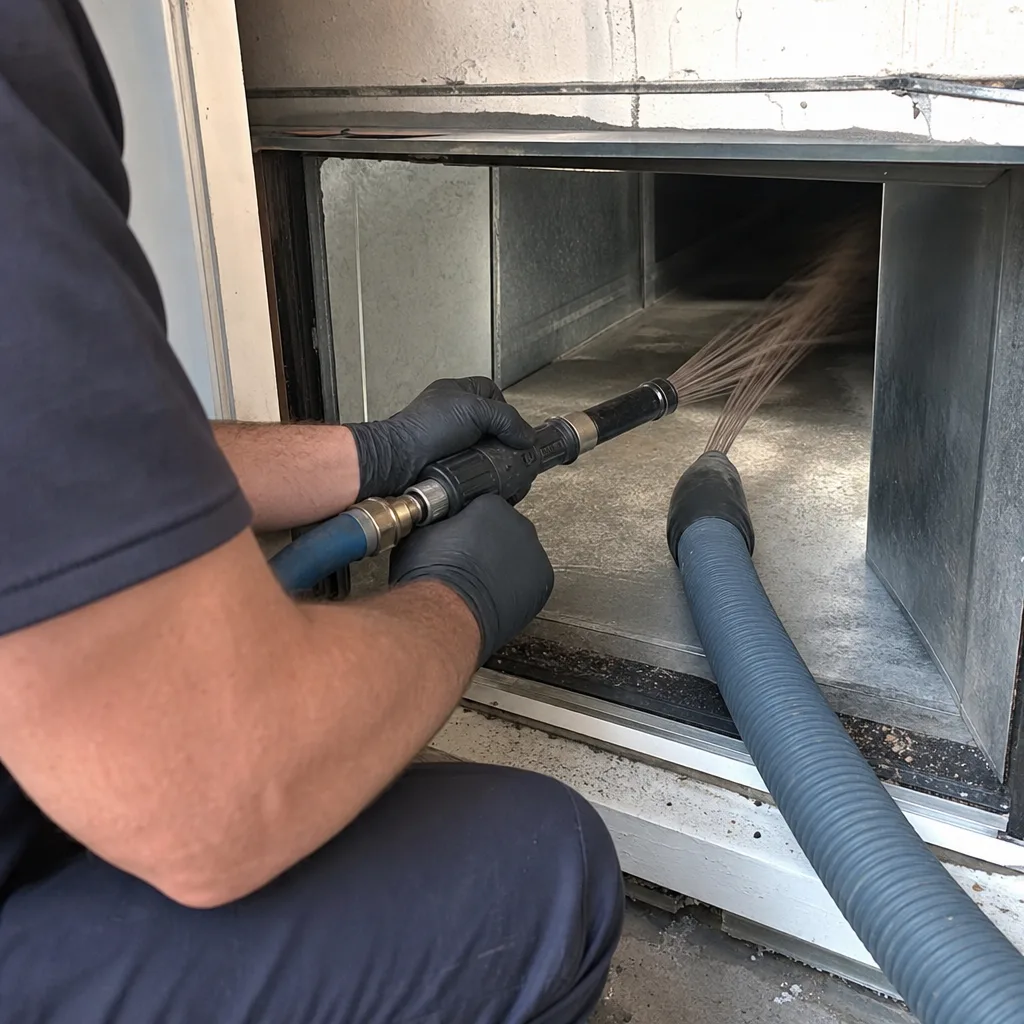
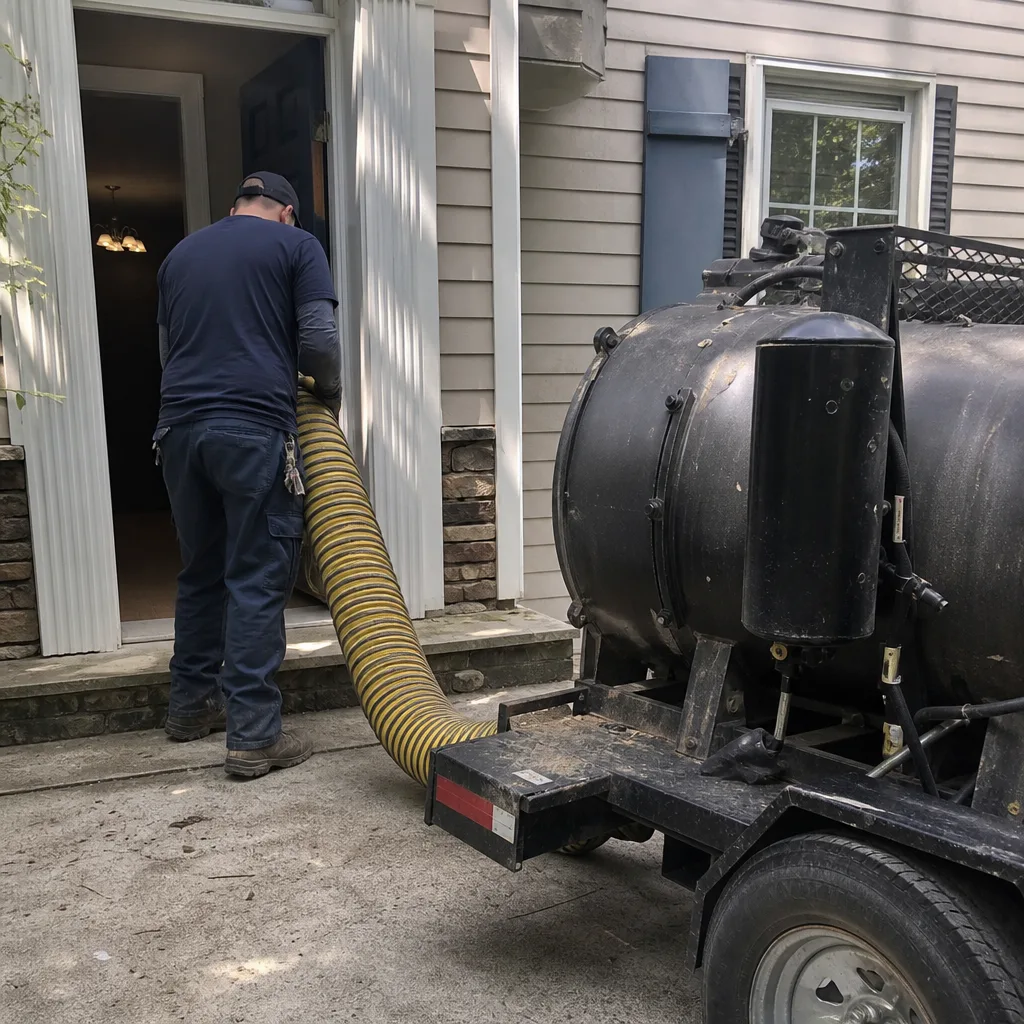
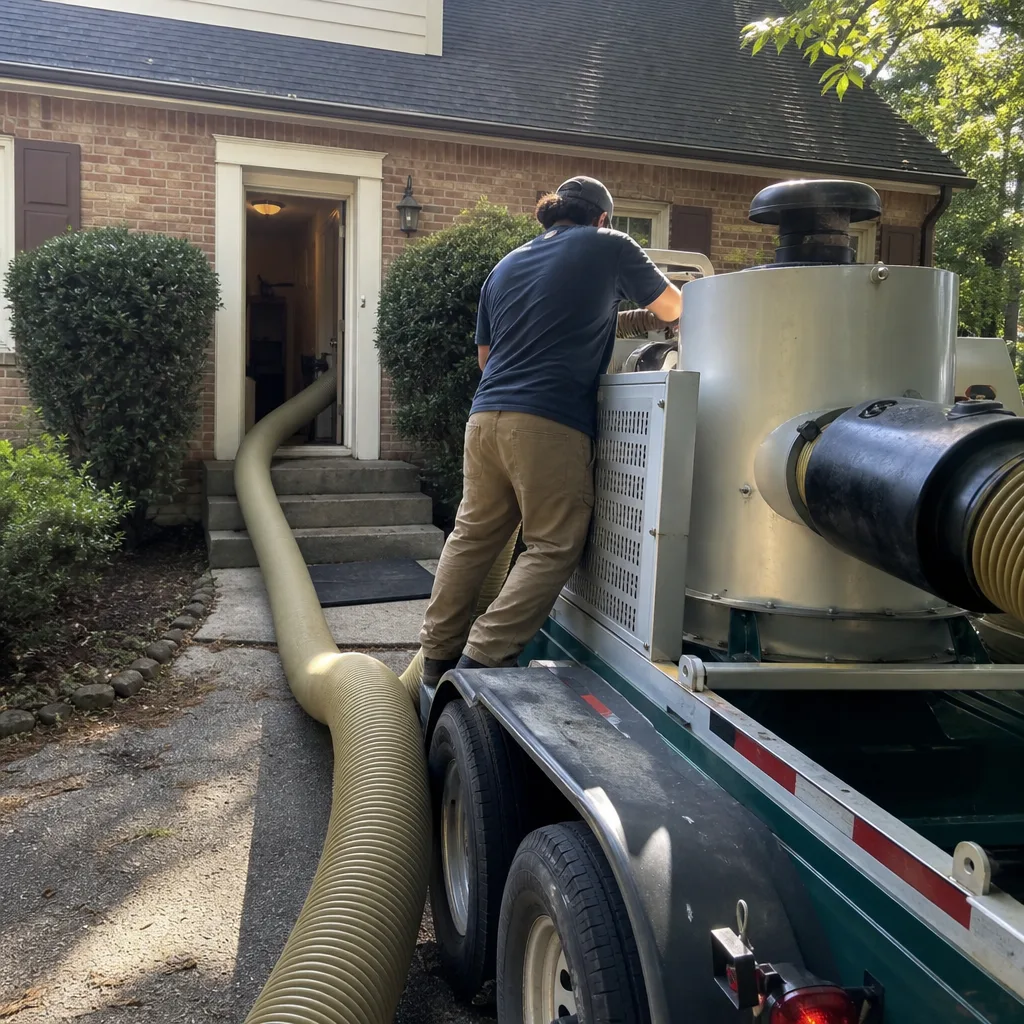
Negative-pressure extraction systems, such as those from Abatement Technologies or Nikro, use a large vacuum unit connected to the duct system to create suction throughout all runs simultaneously. Agitation tools - rotary brushes, air whips, or compressed air systems - dislodge debris while the negative pressure contains and removes it. A shop vacuum or household unit cannot create the 2,000+ CFM airflow or the sealed containment that makes this safe and effective.
At CleanRun Air Duct Cleaning Johns Creek home, we use professional-grade equipment including Rotobrush and Abatement Technologies systems, and we deliver a Documented Photo Record of every duct run before and after. The difference between this and a coupon service with a portable unit is visible in the photographs.
Building Your Running Maintenance Log
A maintenance log transforms your observations into a decision-making tool. Without it, you’re relying on memory when a contractor says “your ducts have never been cleaned” or “this is the worst I’ve seen.” With it, you have evidence.
Format: A simple spreadsheet or bound notebook. Digital is easier to search and share; physical is harder to lose if you’re not diligent about backups. Use what you’ll actually maintain.
Minimum entries per event:
- Date and weather conditions (temperature, humidity if you have a hygrometer)
- Filter: brand, MERV, date installed, date removed, visual loading (light test pass/fail), airflow benchmark result
- Registers inspected: room, condition, any change from prior inspection
- Photos taken: filename or description, storage location
- Professional service: company name, technician name, scope of work, price, warranty terms, photo record received (yes/no)
- Issues noted: description, severity (1-5), action taken or planned
Annual summary:
Each February, before the new pollen season, write a one-paragraph summary: total filter changes, any professional service, trends observed, and planned actions for the coming year, including whether Air Duct Cleaning Permits, Codes & Inspections in GA: What You Need to Know applies to your situation. This becomes your reference when evaluating quotes or deciding whether to schedule service.
A well-maintained log also protects your home value. When selling a Johns Creek home in the $600,000+ range common in Autrey Mill and Ocee, buyers and inspectors increasingly ask about HVAC maintenance history. A documented record with photographs demonstrates care that a verbal claim cannot match.
What Professional Cleaning Costs in Johns Creek
Honest pricing is scarce in this industry. Most Johns Creek homeowners have seen the $79 coupon that becomes a $600 invoice once the technician is in the home. We publish ranges because Haven Standard Clause 1 requires a written price before any work starts, every time.
Whole-system air duct cleaning in Johns Creek:
| Home size / system complexity | Typical range | What’s included |
|---|---|---|
| Single-system home, up to 2,000 sq ft, 8-12 registers | $380 - $520 | Negative-pressure extraction of all supply and return runs, register/grille cleaning, air handler inspection, before/after photo record |
| Single-system home, 2,000 - 3,500 sq ft, 13-20 registers | $480 - $680 | As above, plus additional duct runs and extended access requirements common in two-story Johns Creek homes |
| Dual-system home or home with zoning | $720 - $980 | Complete service on both air handlers and all ductwork; documented separately for each system |
| System with known mold or biofilm contamination | Add $280 - $450 | EPA-registered antimicrobial application, extended dwell time, additional HEPA filtration cycle, post-treatment verification |
These ranges assume standard flex duct and hard pipe construction. Homes with ductboard plenums, extensive custom routing, or access limitations (finished basements, sealed attics) may fall outside these ranges. The written price you receive before work begins accounts for your specific system.
What affects price legitimately: register count, system count, accessibility, contamination severity. What should not affect price after the written quote: “we found more than expected,” “your system needs our premium package,” or any other post-arrival upsell. Haven Standard Clause 1 exists to eliminate this.
We also offer a Free Second Opinion on any written estimate. Bring a competitor’s quote; we put our number next to it in writing. No charge, no obligation.
Air Duct Cleaning in Johns Creek from CleanRun includes the Documented Photo Record on every visit - inside every run, before and after, delivered as part of the standard job record. This practice has been in place since our first job in 2013.
Common Mistakes to Avoid
- Changing filters on a calendar schedule without inspection. A filter in a lightly used guest room system may last six months; the same filter in a main system during Johns Creek’s March pollen surge may load in three weeks. Calendar schedules waste money or starve airflow - inspect, then decide.
- Using the highest MERV filter available. MERV 13+ filters capture fine particulate but restrict airflow significantly. Many Johns Creek homes built 2000-2015 have blower motors not designed for this load. The result is reduced comfort, longer run times, and premature motor failure. Match filter to system capability, not to marketing claims.
- Cleaning registers with water and reinstalling damp. In Johns Creek’s humid climate, a damp register in a cool supply duct creates condensation that breeds mold within 48 hours. Dry completely, or clean on a dry day with the system running.
- Ignoring the return side. Supply ducts get attention because they deliver air you feel. Return ducts pull air from every room, and they’re typically larger, more accessible, and more heavily loaded. A clean supply system with dirty returns recirculates contamination continuously.
- Photographing without scale or angle consistency. A close-up of “dirty duct” from 2023 and “clean duct” from 2024 may show different duct runs, different lighting, or different distances. Include reference objects and shoot from marked positions, or the comparison is meaningless.
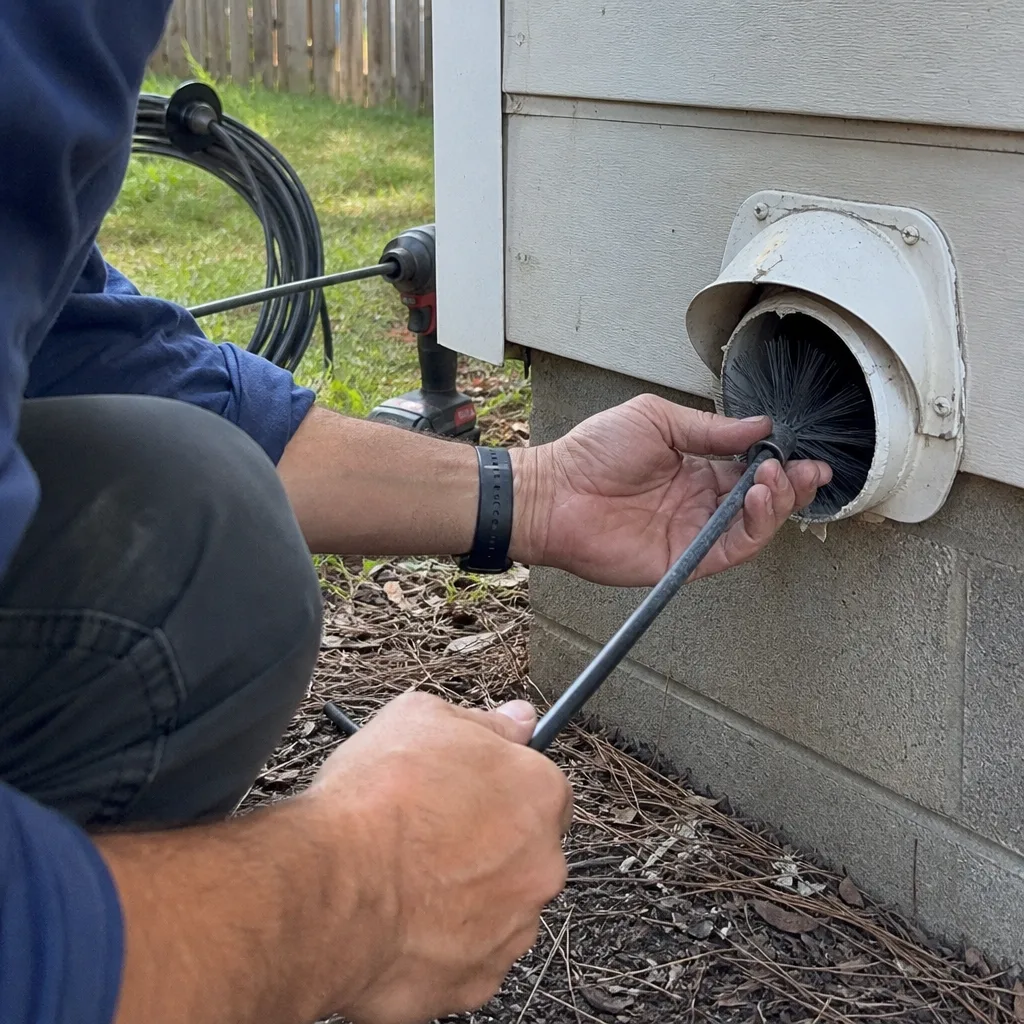
- Hiring based on coupon price without verifying equipment and documentation. A portable vacuum unit and a brush on a drill cannot clean a whole system, and a company that won’t show you before/after photos of your own ducts has no accountability. Ask specifically: what equipment brand? Rotobrush, Nikro, and Abatement Technologies are recognized names you can verify. Will I receive photos of every run? If the answer is evasive, the work is unlikely to be documented.
- Waiting for visible dust at registers. By the time dust is visible, the system is heavily loaded. Register dust is the last symptom, not the first. Your maintenance log should catch buildup before it reaches this stage.
When to Call a Professional
Call for professional assessment when: debris buildup exceeds 1/8 inch in any visible duct section; mold or musty odor is present regardless of visible extent; airflow at distant registers has measurably declined; you’ve completed renovations producing drywall dust or sawdust; or your maintenance log shows accelerating accumulation year over year.
Also call if your home falls into specific Johns Creek risk categories: construction between 1995-2010 with original flex duct (degradation timeline); homes in flood-prone areas near the Chattahoochee with any history of water intrusion; or homes with occupants having respiratory conditions where air quality documentation may support medical or insurance needs.
CleanRun Air Duct Cleaning Johns Creek offers free estimates in Johns Creek - call (470) 326-1926. Every estimate includes a written price before any work starts, under Haven Standard Clause 1. Every completed job includes a Documented Photo Record of every duct run and is backed by the 365-Day Done Right Promise.
Frequently Asked Questions
Whole-system air duct cleaning in Johns Creek typically ranges from $380 for smaller single-system homes to $980 for dual-system or zoned homes, with mold remediation adding $280-$450. These are whole-system prices, not per-vent teaser rates that balloon on arrival. Call (470) 326-1926 for a written estimate specific to your home - estimates are free and include no obligation.
The $79-$149 coupon price typically covers a brief vacuum of accessible registers with a portable unit, not negative-pressure extraction of the full system. The equipment difference is substantial: professional systems from Abatement Technologies or Nikro generate 2,000+ CFM with HEPA containment, while portable units move a fraction of that volume with no containment. The cheaper quote often becomes the more expensive job once the technician is in your home and identifies “additional necessary services.” A written whole-system price before work begins protects against this.
Demand a documented photo record of every duct run, before and after, with timestamps if possible. At CleanRun, this is standard on every job, delivered to the customer as part of the job record. If a company cannot or will not provide this, you have no verification that the ductwork was accessed, let alone cleaned. Your own maintenance log photographs from prior inspections also provide a baseline for comparison.
For most Johns Creek homes, every 3-5 years with proper filter maintenance. Homes with pets, occupants with allergies, or properties near active construction may need more frequent service. The determining factor is not elapsed time but observable buildup in your maintenance log. A home with excellent filtration and tight ductwork may go 7 years; a home with leaky returns in a pollen-heavy area like the Medlock Bridge corridor may need attention in 2-3 years.
You can and should maintain registers, grilles, and the first visible section of return duct. Beyond that, effective cleaning requires negative-pressure extraction equipment that creates containment throughout the system. Disturbing debris in supply ducts without containment blows it into your home. Evaporator coils and internal air handler components require professional-grade foaming agents and technique to avoid damage. The boundary is clear: surface maintenance is homeowner work; internal extraction is professional work.
Yes, in specific ways. The March-May pollen season loads filters and duct surfaces faster than in drier climates. Summer humidity above 80 percent enables microbial growth in any duct with condensation points, particularly in homes with oversized AC systems that short-cycle. And the temperature extremes in unconditioned attics - common in Johns Creek’s 1990s-2000s construction - accelerate flex duct degradation, increasing leakage that pulls unfiltered air into the system. Your maintenance log should track these seasonal effects explicitly.
The Bottom Line
A maintenance checklist is only as good as the record it produces. Change filters based on observable loading, not calendar dates. Inspect semi-annually, photograph consistently, and maintain a log that makes trends visible. Know the boundary between homeowner maintenance and professional service, and demand documentation - written prices before work, photo records after - from any contractor you hire. In Johns Creek’s specific climate of heavy pollen, high summer humidity, and aging residential duct infrastructure, evidence-based maintenance isn’t just good practice. It’s how you avoid becoming the next story about a $79 coupon that became a $600 surprise. For additional help, see more guides & resources.
CleanRun Air Duct Cleaning Johns Creek has served the area since 2013, completing over 52,000 homes with written prices before every job and documented photo records after. The 365-Day Done Right Promise, Haven Standard Clause 1 upfront pricing, and Free Second Opinion on any written estimate are available to every homeowner. Call (470) 326-1926 for a free estimate.
Written by Tomas Reyes, Owner at CleanRun Air Duct Cleaning Johns Creek, serving Johns Creek since 2013.