
Last updated September 23, 2026
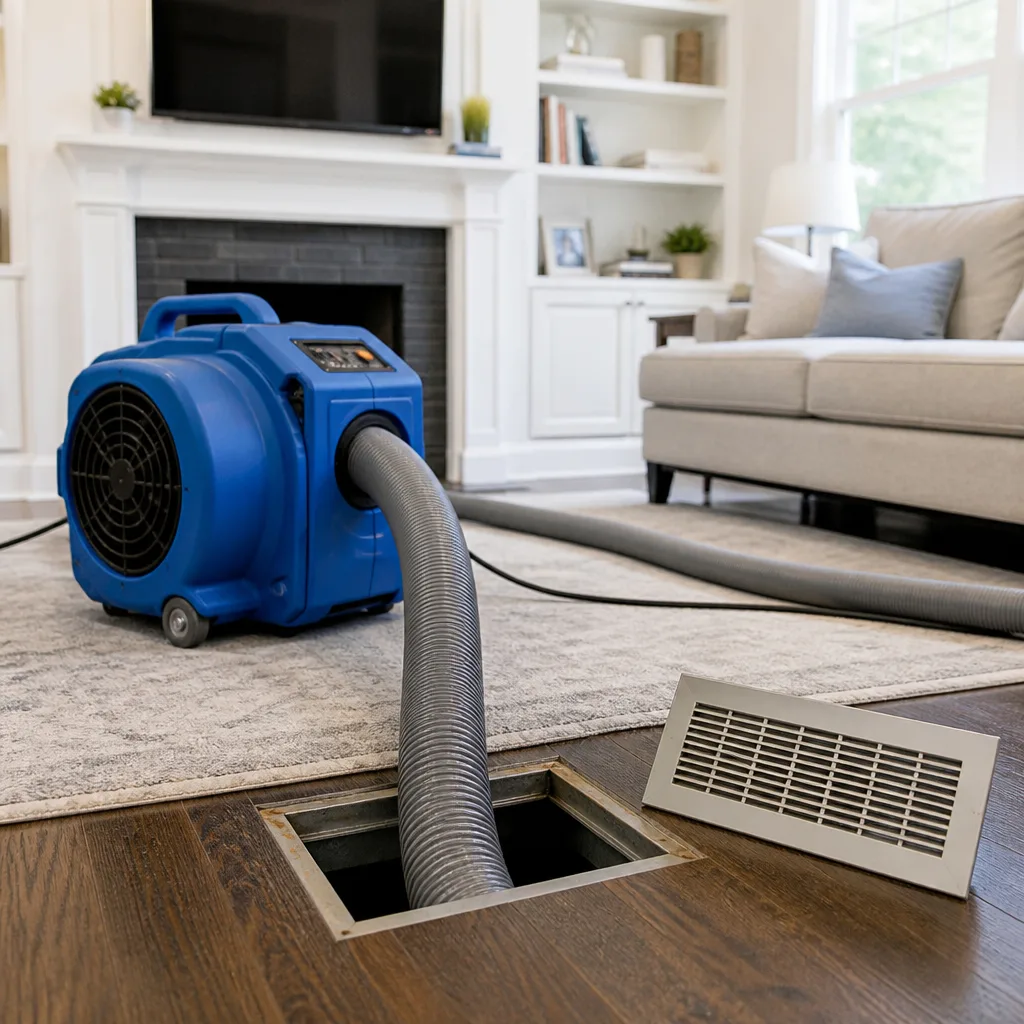
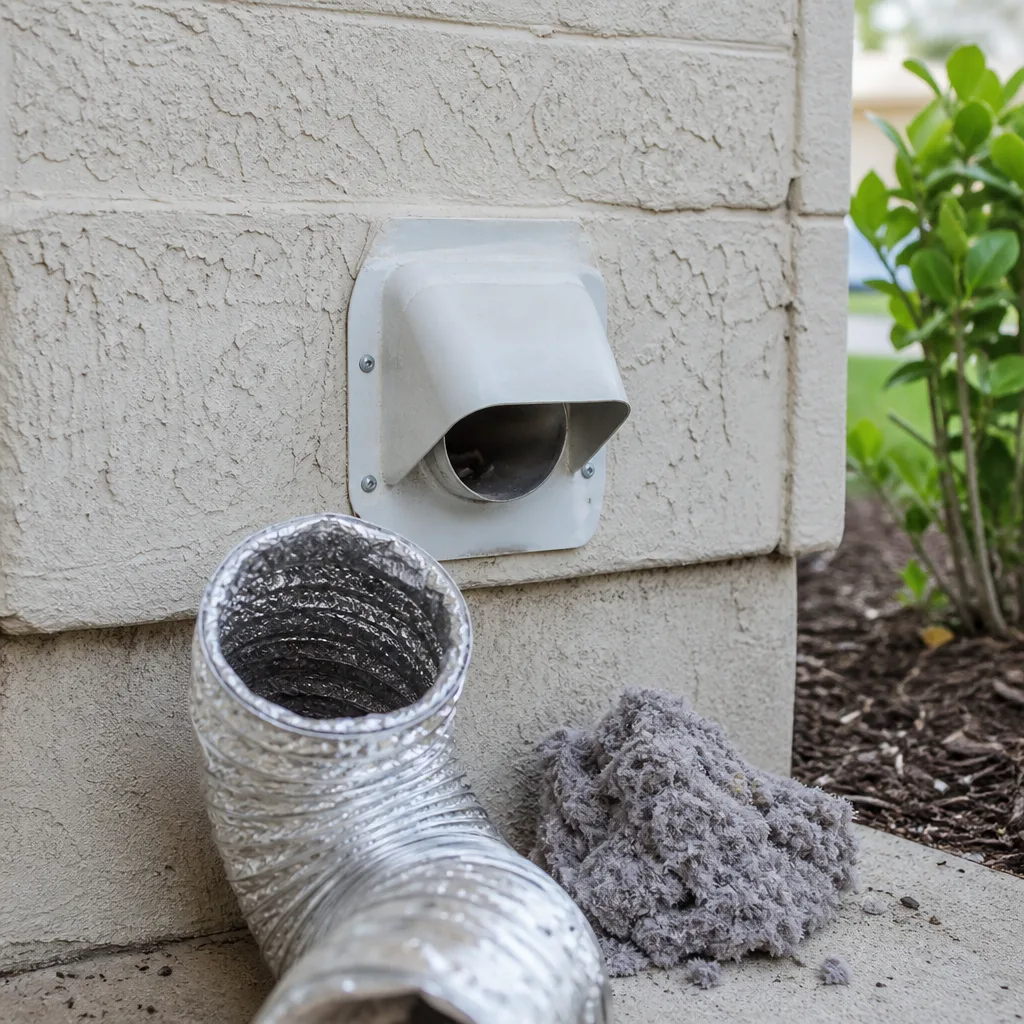
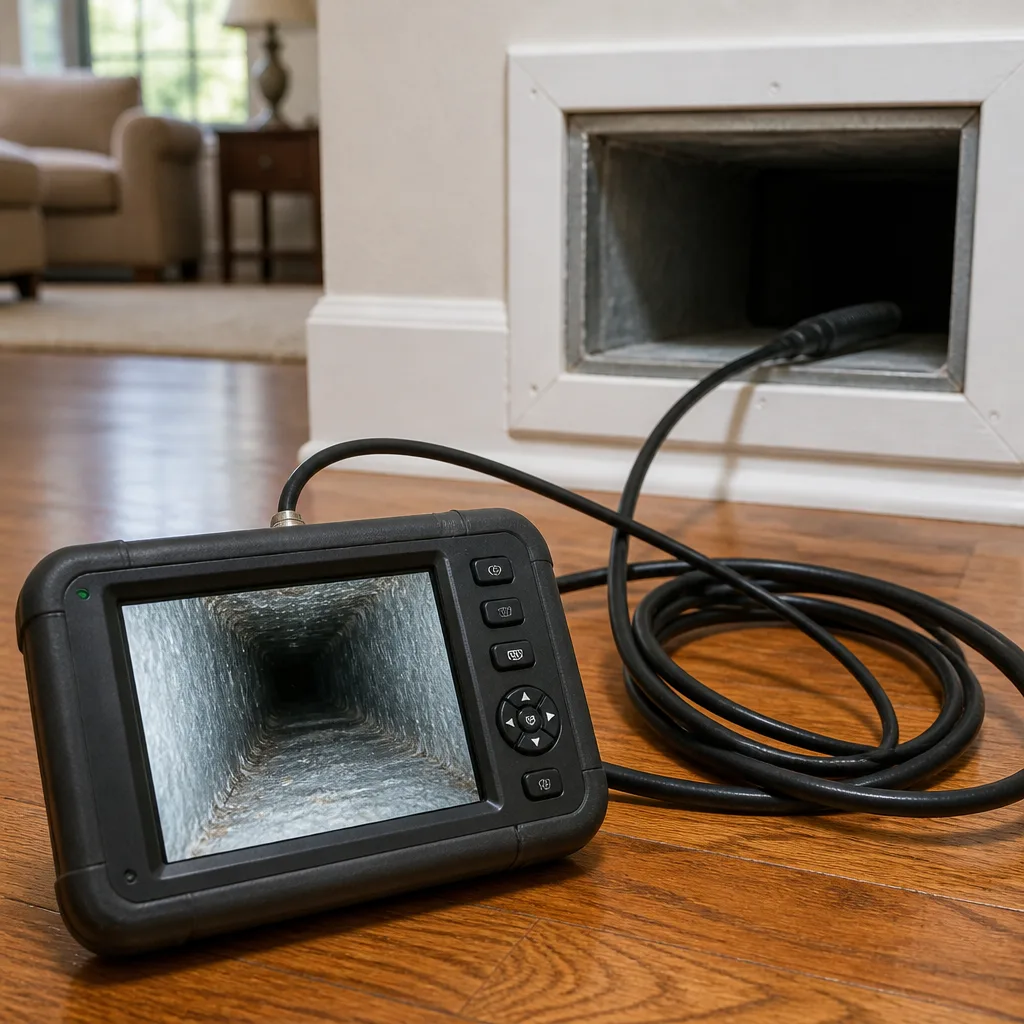
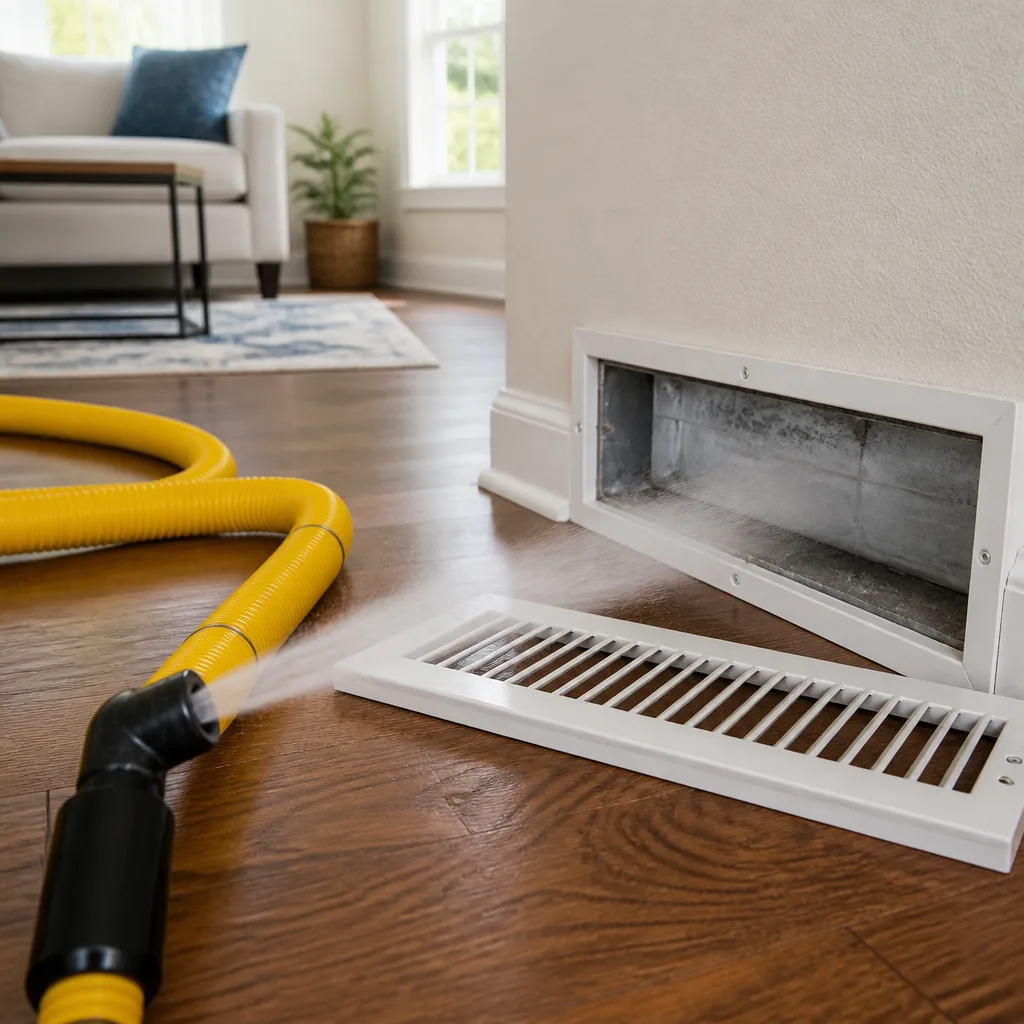
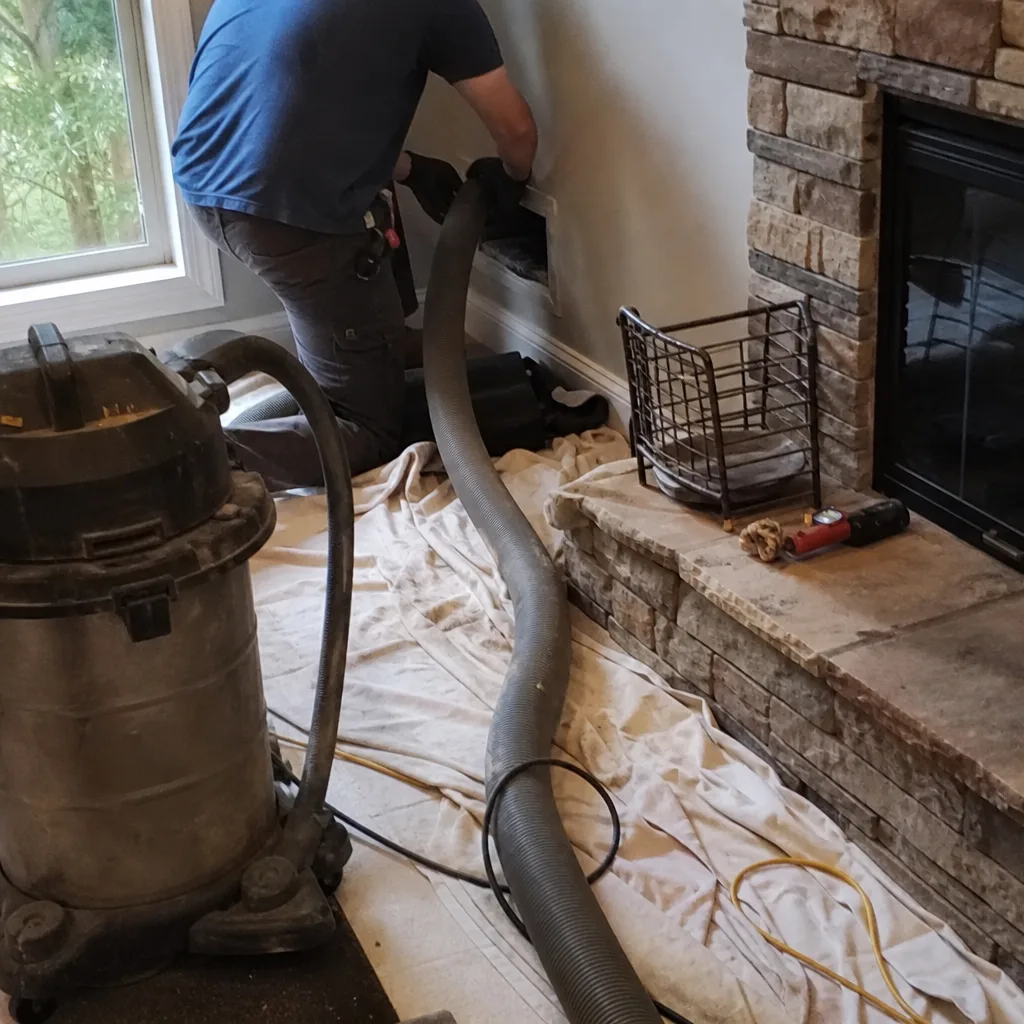
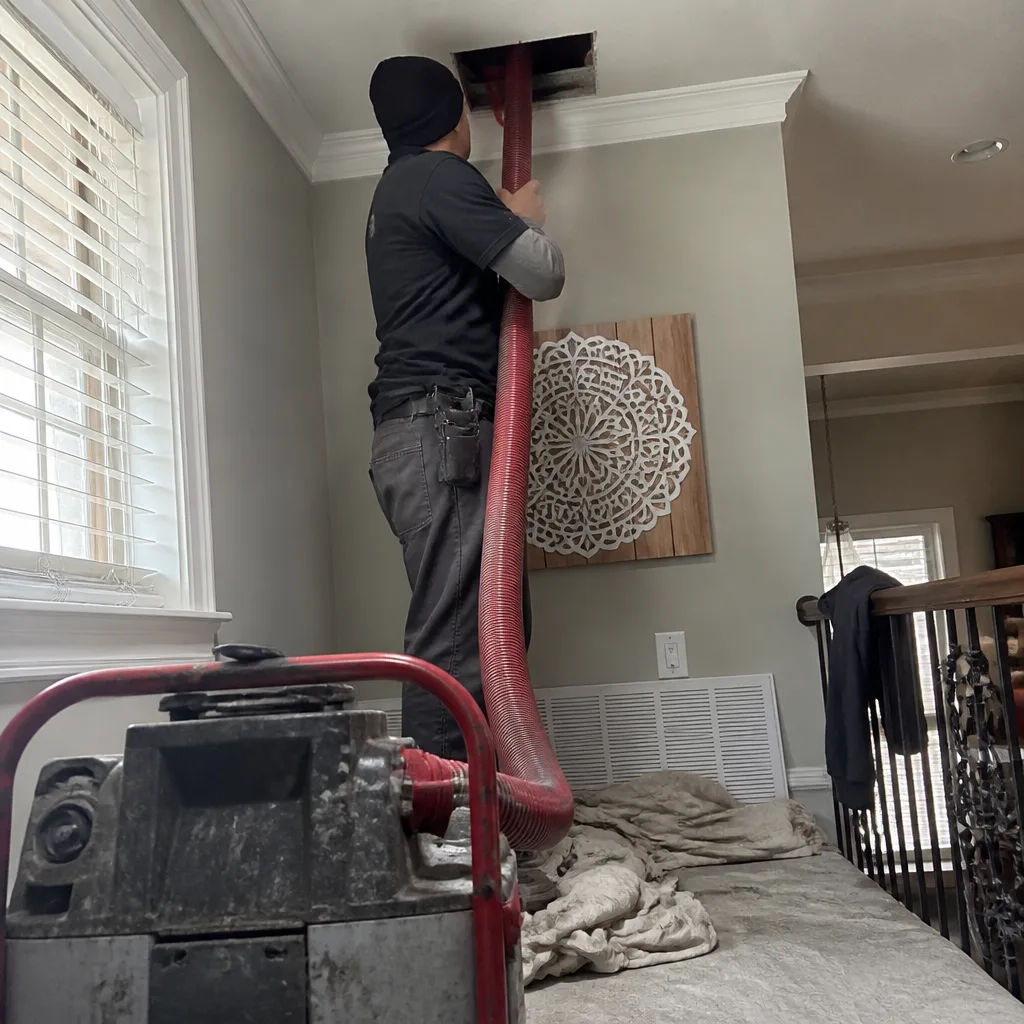
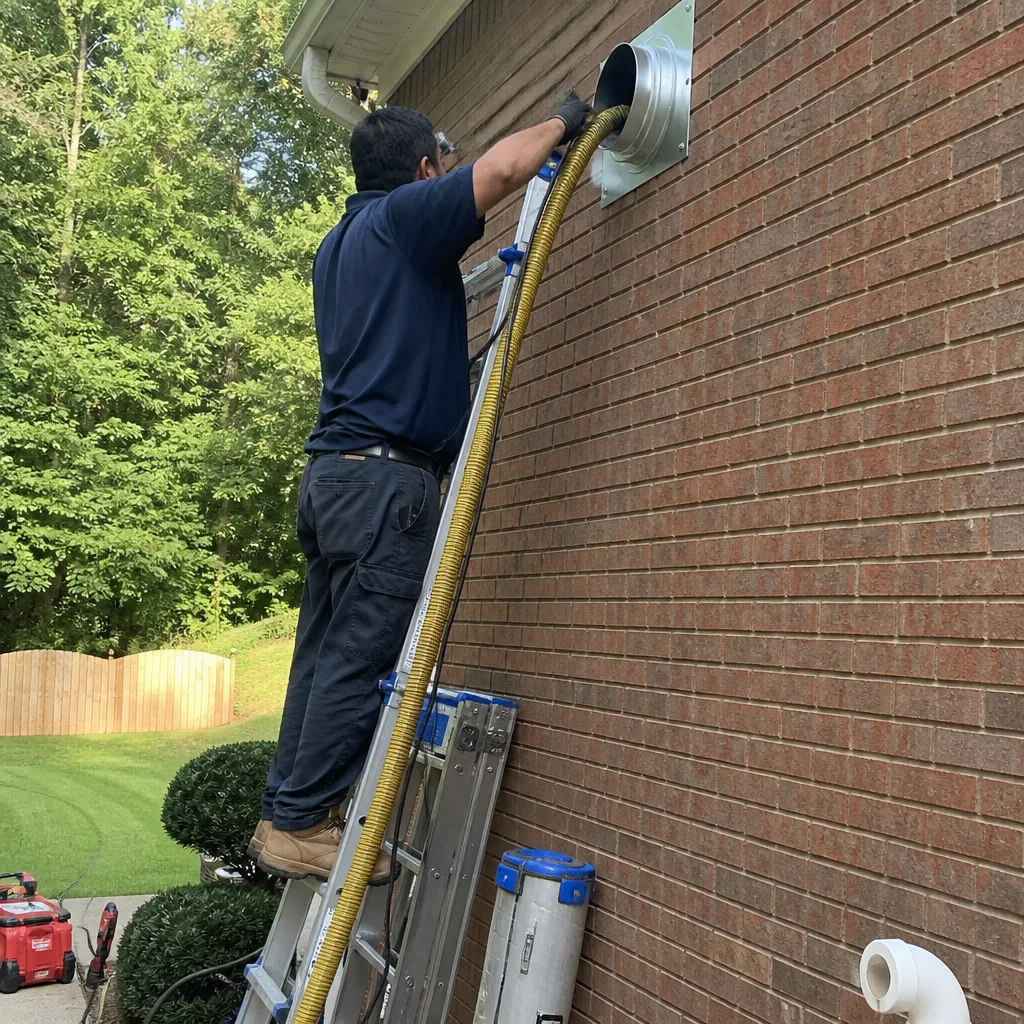
Whole-system duct and dryer vent check with before-and-after photos - you see exactly what came out of your vents
That "$99 whole-house special" is a bait ad - the real number appears once they are in your hallway, or the "clean" is a shop-vac at the register. We photograph the inside of your ducts before and after instead.
 Before
 After
After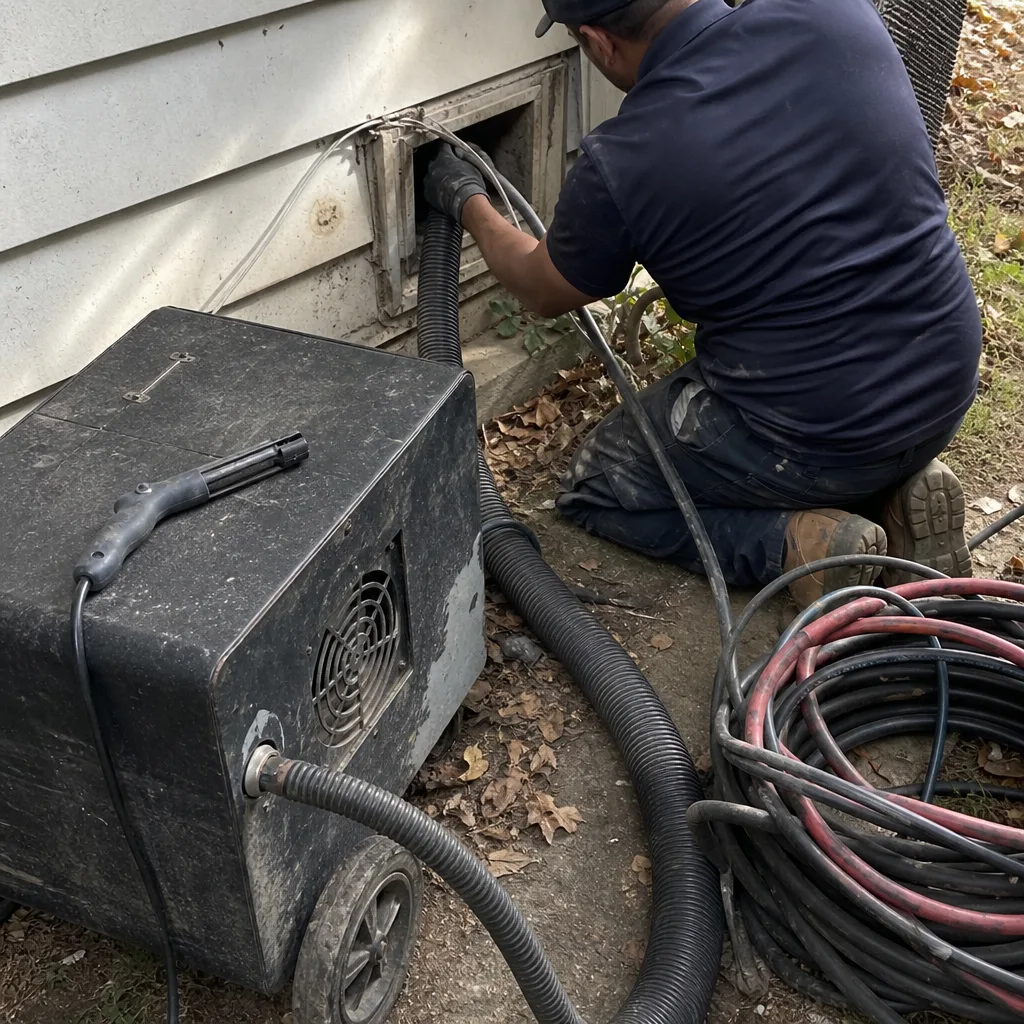 Before
 After
After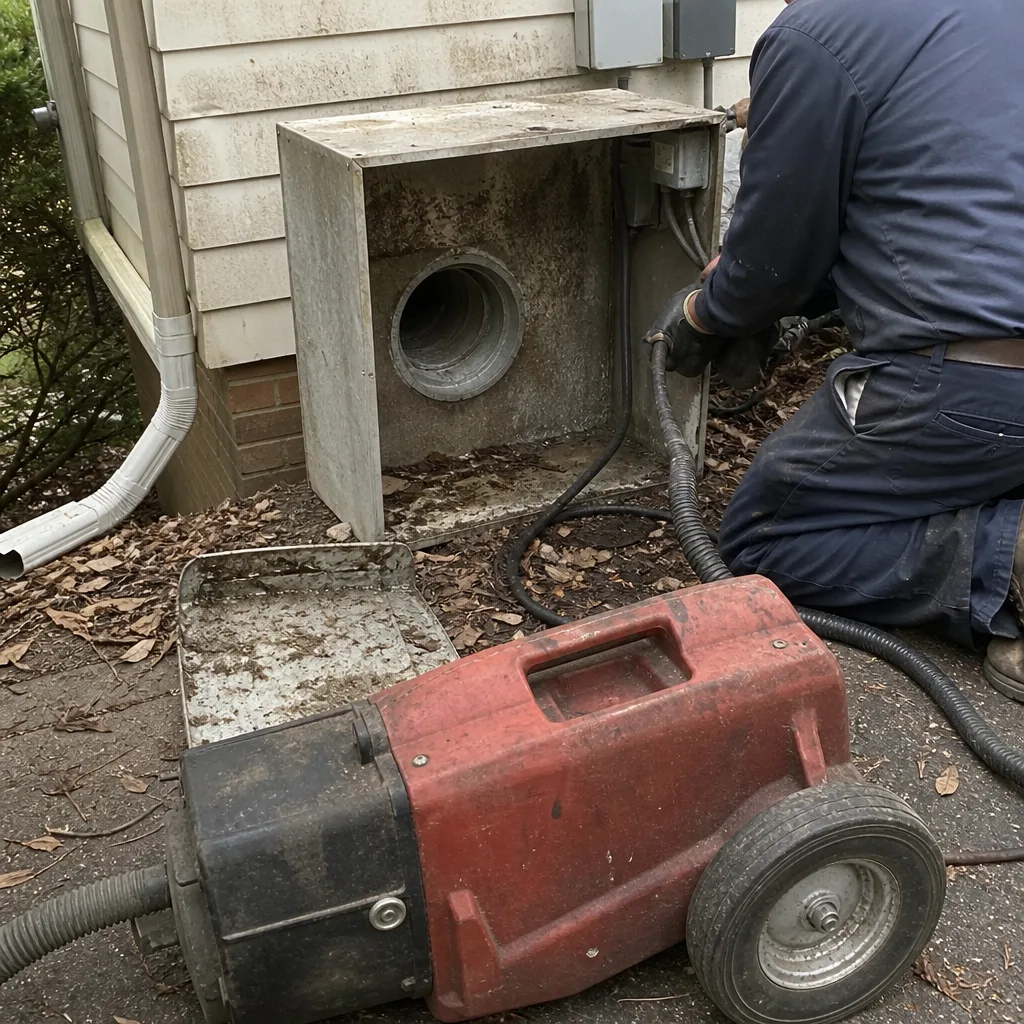 Before
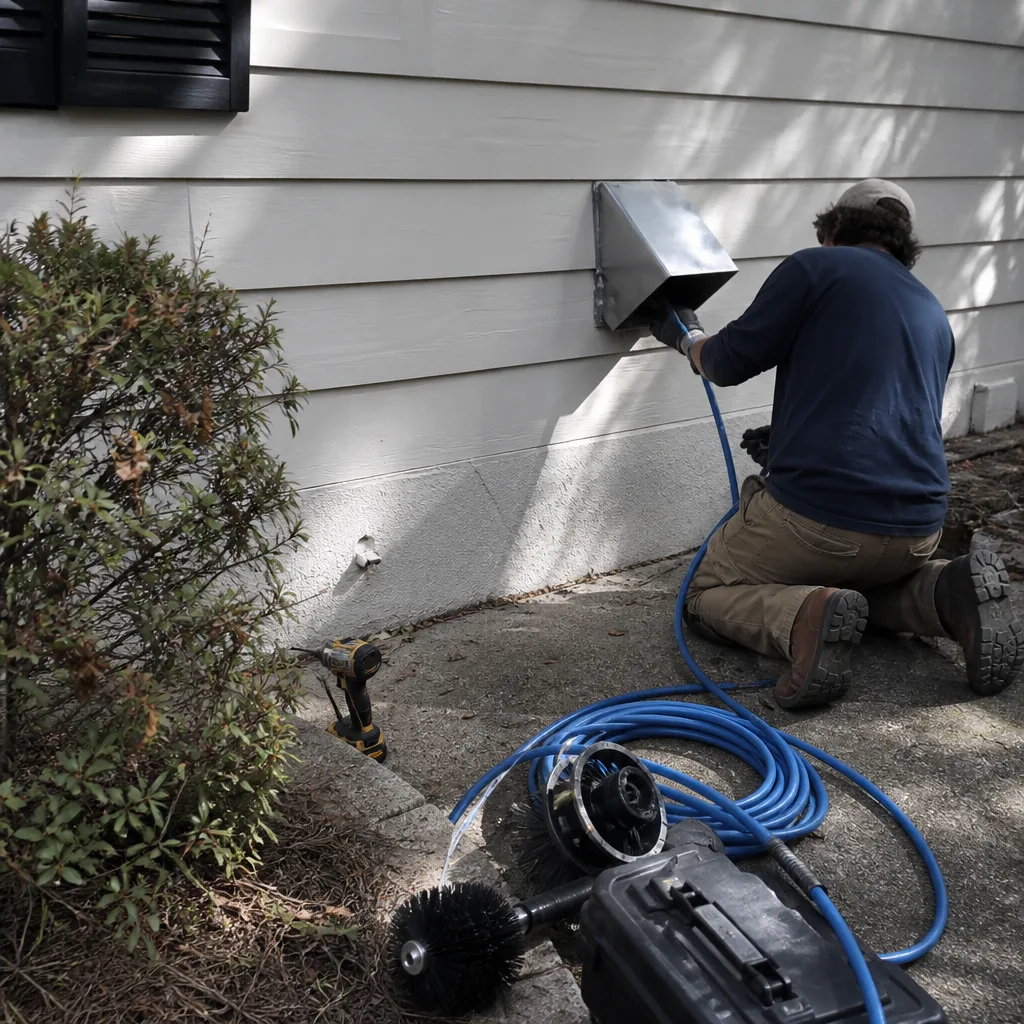 After
AfterAir Duct Cleaning Warning Signs: A Johns Creek Homeowner’s Reference Guide
Here’s a number that puts the whole industry in perspective: in twelve years of documenting ductwork across Johns Creek, we’ve photographed dust at every single register we’ve ever encountered. Every one. If register dust were a reliable warning sign, every home in Country Club of the South, St. Ives, and Medlock Bridge would need cleaning twice a year. This guide-along with our The Complete Guide to Air Duct Cleaning in Johns Creek-separates the five genuinely actionable warning signs from the eight conditions that are simply how forced-air systems behave in a humid subtropical climate. You’ll learn how to document what you’re seeing with a phone camera, run a simple airflow diagnostic with a tissue and a timer, and distinguish between a $400 maintenance issue and a $2,400 contamination event before you call anyone.
Quick Answer
The five warning signs that actually indicate professional Air Duct Cleaning is warranted in Johns Creek are: (1) localized dark streaking or textured debris patterns at specific registers, indicating a duct breach or contamination event; (2) persistent musty odor that intensifies when the system cycles, suggesting biological growth in the plenum or main trunk; (3) measurable airflow drop of 30% or more at distant registers compared to proximal ones, signaling significant blockage or duct separation; (4) post-renovation dust with visible particle size above 100 microns and gypsum or wood fiber content; and (5) recurrent filter collapse or rapid loading within two weeks of replacement. Normal register dust, occasional HVAC odors on startup, and seasonal allergy symptoms without other indicators do not, by themselves, justify cleaning.
Table of Contents
- Normal HVAC Behavior vs. Actionable Warning Signs
- What Register Debris Patterns Actually Mean
- The Musty Odor Diagnostic: Growth vs. Dirty Coil
- The Tissue-and-Timer Airflow Test
- Post-Renovation Contamination: What to Look For
- Warning Signs by Urgency: When to Act
- Common Mistakes to Avoid
- When to Call a Professional
- Frequently Asked Questions
BeforeAfterNormal HVAC Behavior vs. Actionable Warning Signs
Forced-air systems in Johns Creek operate under conditions that produce benign surface effects. The outdoor design temperature hits 92°F in summer with relative humidity averaging 72%, and winter lows dip into the 20s. That thermal cycling, combined with pollen counts that regularly exceed 1,500 grains per cubic meter in March and April, means your return air path will always carry particulate. The supply side will always deposit some fraction near the register. This is engineering reality, not failure.
We’ve documented eight conditions that homeowners frequently mistake for warning signs. In our experience across Johns Creek neighborhoods from Abbots Run to Rivermont, these are normal:
- Light, even dust film on register fins. This is boundary-layer deposition. Air slows as it exits the register, and particles above 10 microns drop out. Wipe it with a damp cloth; if it returns uniformly over 6-8 weeks, that’s normal cycle time.
- Brief odor on first cooling cycle of spring. The evaporator coil and drain pan hold residual moisture through winter. The first 10-minute cycle volatilizes that stagnant condensate. It dissipates within minutes and does not recur.
- Visible dust in return air grille. The grille is a particle trap by design. If the filter upstream is intact and properly seated, the dust is pre-filter loading, not duct contamination.
- Seasonal allergy symptoms indoors. Johns Creek’s tree pollen season (February through May) overwhelms most residential filtration. MERV 8 filters capture less than 20% of oak and pine pollen. Symptoms correlate with outdoor counts, not duct condition.
- Occasional whistling at one register. This is damper position or register slot geometry, not blockage. Adjust the damper blade; if sound changes, it’s airflow velocity, not obstruction.
- Filter surface loading at 60-90 days. A 1-inch pleated filter at MERV 11 in a 2,400-square-foot Johns Creek home with two occupants and one pet should load in this interval. Faster loading indicates filter area inadequacy or bypass leakage, not necessarily duct contamination.
- Static cling dust near electronics. Ionizing devices and CRT screens (where still present) attract particles electrostatically. This is physics, not pathology.
- Dust streaking on walls near ceiling registers. Called “ghosting,” this is thermal tracking. Warm, moisture-laden air contacts cooler drywall, and particles deposit at the condensation line. It indicates envelope or insulation issues, not duct cleanliness.
The five actionable signs share a common feature: they represent a change from established baseline, or they exhibit pattern characteristics that indicate a specific mechanical or contamination event rather than gradual accumulation. We’ll examine each in detail.
What Register Debris Patterns Actually Mean
In 2019, we documented a case in The Falls of Autry Mill that illustrates the distinction precisely. The homeowner called about “black dust” at a second-floor bedroom register. Our pre-work photo showed not uniform film but radial streaking: dark, fibrous material concentrated at the register’s horizontal centerline, with clean zones at the perimeter corners. The camera inspection revealed a disconnected flex duct at a trunk saddle, pulling attic insulation into the airstream. The debris was fiberglass and cellulose, not household dust. The fix was duct reconnection and sealing, not cleaning alone.
Normal register dust has these characteristics: light tan to gray color, uniform distribution across fin surfaces, dry and powdery texture, and gradual reaccumulation after cleaning. It wipes away with a damp cloth without residue.
Actionable debris patterns show one or more of these features:
- Localized concentration. Heavy accumulation at one or two registers with minimal loading at adjacent ones. This indicates a proximal source: duct breach, dead rodent, or localized moisture intrusion.
- Dark streaking or smearing. Black, brown, or greenish material that smears when dampened. This suggests biological growth, soot, or oil contamination. In Johns Creek’s climate, dark streaking with musty odor often indicates Cladosporium or Aspergillus growth at a condensation point.
- Fibrous or particulate texture visible to naked eye. Particles above 100 microns, or visible fiber structures. Household dust is sub-50 micron; visible fibers indicate insulation degradation, construction debris, or filter media breakdown.
- Oily or greasy residue. This is rare but significant. It indicates lubricant mist from a failing blower motor bearing, or in homes with gas cooking and inadequate range ventilation, condensed grease aerosol. Both require mechanical repair, not cleaning alone.
- Rapid reaccumulation after cleaning. If heavy loading returns within 7-14 days, the source is active and ongoing, not residual.
Documentation protocol: photograph the register before touching it. Include a ruler or coin for scale. Note the register location (room, floor, proximity to kitchen or bathroom), the date of last filter change, and any recent contractor activity (roofing, insulation, pest control). This record is what a technician needs to distinguish source from symptom.
For homeowners in Johns Creek’s newer subdivisions like Encore or Olmstead, pay particular attention to registers near attic access panels or where flex ducts make sharp bends. The 2015-2020 construction boom in north Fulton County produced many installations with inadequate support spacing on flex runs, leading to sagging and disconnection at saddles.
The Musty Odor Diagnostic: Growth vs. Dirty Coil
Musty odor is the most misdiagnosed complaint in our service area. Homeowners describe it identically regardless of source, and many contractors treat every musty call with duct cleaning, collecting payment for work that doesn’t resolve the odor because the source was never in the ductwork.
Two distinct mechanisms produce musty odor in Johns Creek homes. They require different interventions and carry different cost profiles.
Biological Growth in Ductwork or Plenum
This occurs where the duct system temperature drops below the dewpoint of the surrounding air, creating sustained condensation on interior surfaces. In Johns Creek, the critical period is May through September, when attic temperatures exceed 130°F and supply air leaves the coil at 55°F. The temperature differential across duct insulation creates cold spots at seams, supports, and access panels.
Growth-related odor has these characteristics: persists and intensifies when the system cycles, especially after 10+ minutes of continuous operation; may be stronger at registers distant from the air handler (longer residence time in contaminated duct); often described as “earthy” or “mushroom-like” rather than simply stale; and may correlate with visible dark staining at register openings or on nearby ceiling surfaces.
The diagnostic: close all registers in one zone, run the system for 30 minutes, then open one register and smell immediately. If odor intensity varies significantly by zone, the contamination is localized to that duct branch. If uniform across all zones, suspect the plenum or main trunk.
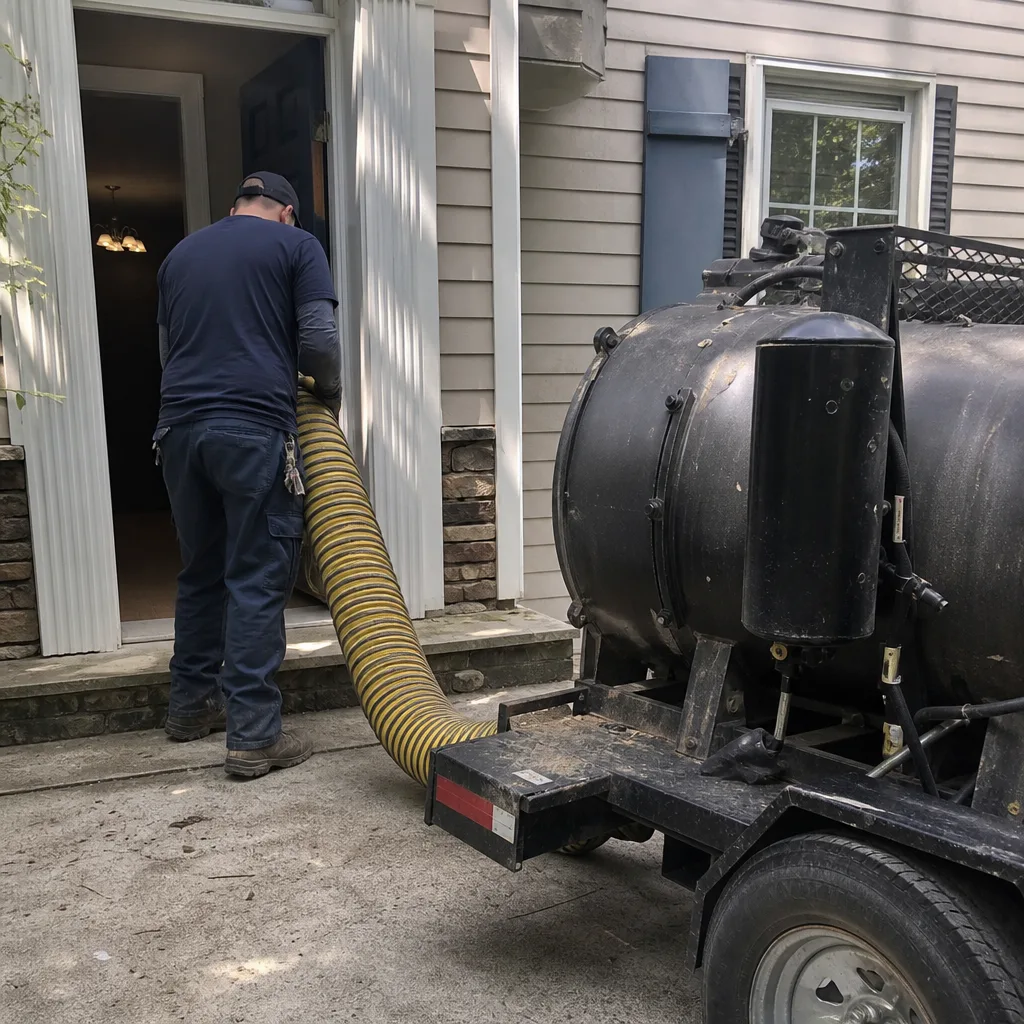
Remediation requires mechanical cleaning with negative-pressure extraction, followed by application of an EPA-registered antimicrobial. CleanRun uses Abatement Technologies portable HEPA filtration during this work to prevent cross-contamination. Cost for localized growth in a single branch typically ranges $600-$900 in Johns Creek. Full-system plenum and trunk cleaning runs $1,400-$2,200 depending on system size and access. See our DIY vs Professional Air Duct Cleaning: The Johns Creek Homeowner’s Decision Guide for help deciding when to call a pro.
Dirty Evaporator Coil and Drain Pan
The coil sits downstream of the filter but upstream of the supply plenum. It is wet for 2,000+ hours annually in Johns Creek’s climate. Dust that bypasses the filter adheres to the wet fins and supports bacterial growth in the condensate film. The odor is biochemically distinct: more “locker room” than “forest floor,” often strongest at startup before the condensate flow washes the biofilm.
Coil-related odor has these characteristics: strongest in the first 3-5 minutes after compressor startup; diminishes as the system runs continuously; often accompanied by gurgling or slurping sounds from the drain line as biofilm partially obstructs flow; and may correlate with water stains below the air handler or in the secondary drain pan.
The diagnostic: run the system for 20 minutes continuously. If odor decreases significantly, suspect the coil. Access the coil through the air handler cabinet (typically a sheet metal panel with 4-8 screws) and photograph it with your phone. Heavy matting of gray or brown material on the fins confirms coil fouling, not duct contamination.
Remediation is coil cleaning and pan treatment, not duct cleaning. This is an HVAC maintenance task, typically $350-$550. HVAC Cleaning in Johns Creek addresses this specifically. A contractor who quotes duct cleaning for coil odor either hasn’t diagnosed correctly or hasn’t inspected.
The Critical Distinction
Both conditions may coexist. But treating coil odor with duct cleaning wastes money and leaves the odor unresolved. The photo record we provide on every job includes the coil condition precisely so customers can verify which surfaces were actually cleaned. Haven Standard Clause 1 requires written scope definition before work starts; if the scope says “duct cleaning” and the odor source is the coil, the estimate is wrong before the truck leaves.
The Tissue-and-Timer Airflow Test
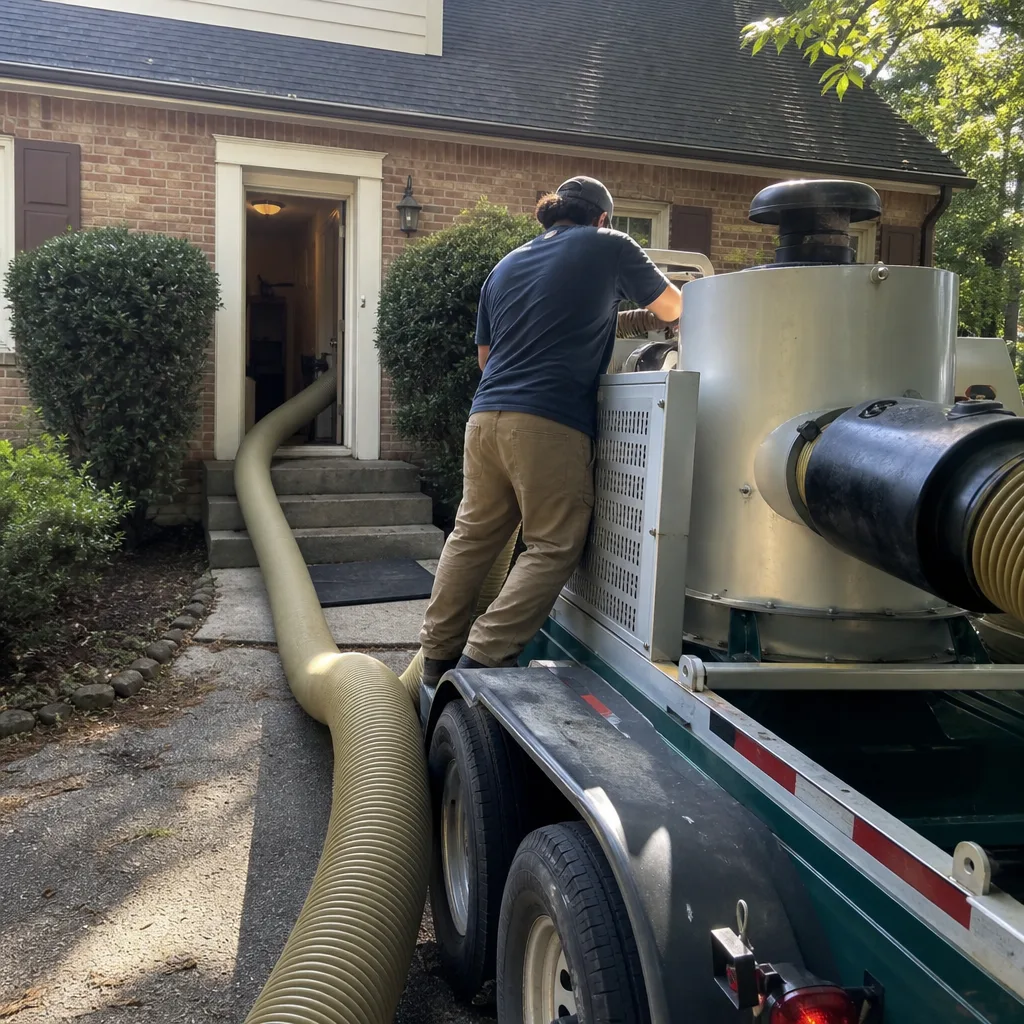
This test requires no tools beyond a single-ply tissue and a smartphone timer. It measures relative airflow at each register, which indicates duct integrity more reliably than visual inspection of the register itself.
- Close all interior doors. The system is designed for open-path return air. Closed doors create artificial pressure differentials that skew results.
- Set the thermostat to fan-only mode. Eliminate temperature effects. Cooling or heating cycles create thermal buoyancy that affects tissue behavior.
- Hold a single-ply tissue vertically, 2 inches below each register center. Do not touch the register. Record whether the tissue is drawn upward, pushed away, or hangs neutrally.
- Time how long the tissue remains in motion after release. At a properly flowing register, the tissue should flutter for 3-5 seconds after you let go. Immediate settling indicates airflow below 50% of design.
- Map your results by register location. Note room, floor, and distance from the air handler in duct feet (roughly linear feet from the mechanical room).
Interpretation:
- Uniform upward draw, 3-5 second flutter at all registers: Duct system is intact. Any dust or odor complaints are source-related, not blockage-related.
- Progressive weakening with distance from air handler: Normal friction loss in flex duct. A 15-20% drop at the farthest register is expected. Beyond 30% suggests excessive run length, kinked flex, or accumulated debris at low points.
- Single register with no draw or reverse flow (tissue pushed away): Duct disconnection or severe blockage. Reverse flow indicates supply air leaking into the return path or a pressurized interstitial space. This is a “schedule within 48 hours” condition.
- Entire zone (e.g., all second-floor registers) weak while first floor is strong: Zone damper failure, duct separation at the main trunk split, or collapsed flex in an attic chase. Common in Johns Creek homes with zone systems installed 2015-2018, when motorized dampers had higher failure rates.
We’ve applied this test in over 200 Johns Creek homes. In one case in Rivermont, the tissue hung neutrally at a master bedroom register despite audible blower operation. Camera inspection showed a flex duct completely detached at the trunk, blowing 55°F air into the attic for three cooling seasons. The homeowner’s complaint was “the bedroom never cools well” and “my electric bill is high.” The tissue test took 90 seconds and pointed directly to a $180 reconnection that solved both problems.
Document your test with photos of the tissue at each register and a simple sketch of your floor plan with airflow notes. This is the evidence a technician needs to prioritize inspection points.
Post-Renovation Contamination: What to Look For
Johns Creek’s housing stock has significant renovation activity. Homes in Country Club of the South and St. Ives built in the 1990s are undergoing kitchen expansions, master suite additions, and full HVAC replacements. Newer homes in Encore and Rivermont are seeing finished basement conversions and outdoor living additions. Every renovation generates particulate that the HVAC system will ingest if not fully isolated.
General household dust and post-renovation debris differ in ways that determine whether duct cleaning is necessary, and what type.
Particle Characteristics
| Feature | Normal Household Dust | Post-Renovation Debris |
|---|---|---|
| Color | Tan to light gray | White (gypsum), tan (wood fiber), or pink (insulation) |
| Particle size | Sub-50 micron, not individually visible | 100-500 micron, visible to naked eye |
| Texture | Fine, powdery | Gritty, fibrous, or flaky |
| Location pattern | Uniform across all registers | Concentrated at registers nearest work zone |
| Filter loading | Gradual over 60-90 days | Rapid, often complete clog in 7-14 days |
| Odor | None or faintly organic | Chemical (cutting oil, adhesive, paint solvent) |
The critical observation is particle size. If you can see individual particles at the register without magnification, they did not originate from normal household activity. They were generated by a cutting, grinding, or demolition process and transported through the duct system before the filter could capture them.
When Cleaning Is Necessary
Minor renovation, one room, with HVAC shut down and registers sealed: visual inspection is sufficient. If the filter was changed immediately post-project and shows only normal loading, duct cleaning is probably unnecessary.
Major renovation, multiple rooms, or HVAC operation during work: cleaning is warranted. The particle load exceeds filter capacity, and larger particles settle in duct low points where they become nucleation sites for future accumulation. In Johns Creek’s humidity, gypsum debris in particular supports mold growth within 90 days if moisture condenses on the particle surface.
Whole-system replacement or addition: mandatory cleaning of existing ductwork before commissioning. New equipment with dirty ducts is like new tires on misaligned wheels. The 365-Day Done Right Promise requires this on every equipment changeout we touch; we’ve voided the warranty claim on jobs where prior contractors skipped it.
Documentation protocol for post-renovation: photograph the filter immediately after project completion. Note the date, the scope of work, and whether the system was operated during construction. This establishes the contamination timeline that determines cleaning urgency.
Warning Signs by Urgency: When to Act
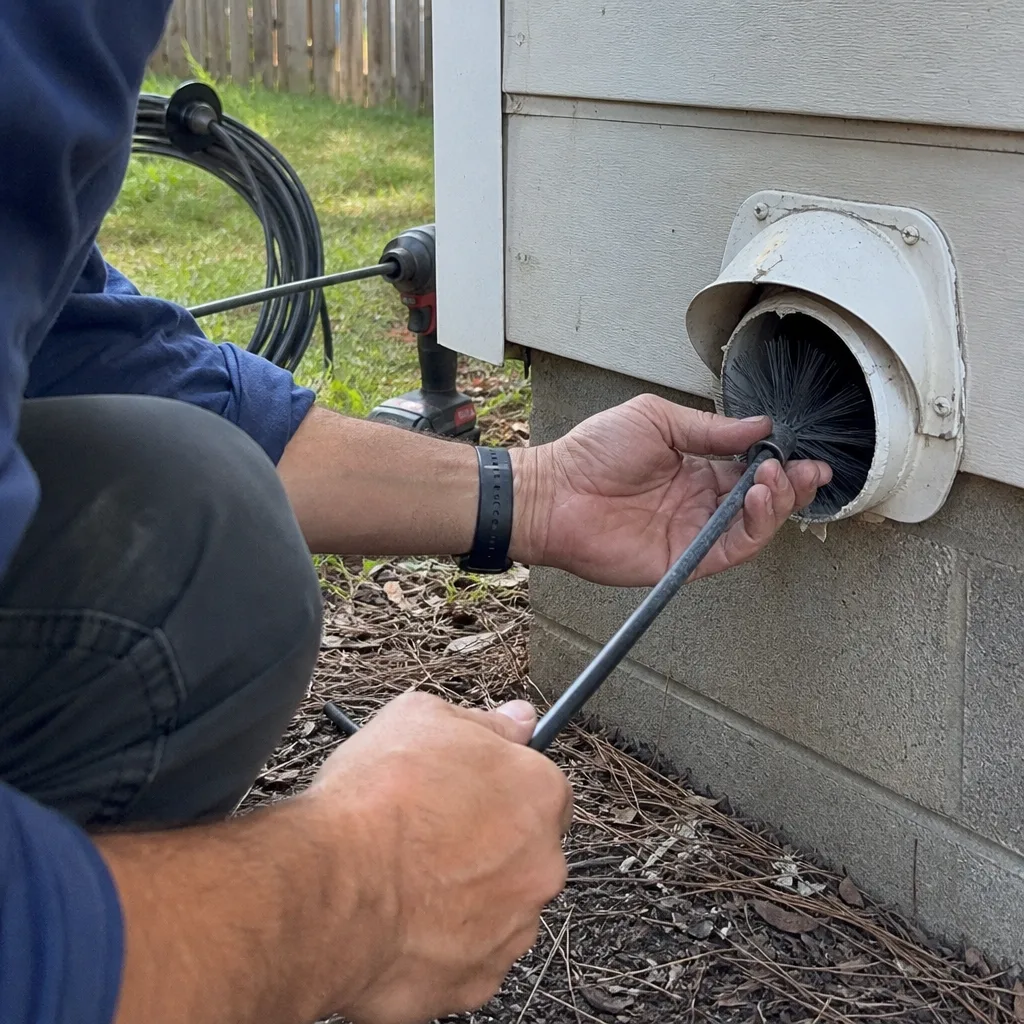
Not every warning sign demands immediate response. This table classifies by urgency based on health risk, system damage potential, and cost escalation if deferred.
| Urgency | Sign | Reasoning | Typical Johns Creek Cost if Addressed Promptly |
|---|---|---|---|
| Act within 48 hours | Single register with reverse airflow or no airflow; visible water or moisture at register; odor of natural gas or electrical burning | Duct disconnection wastes 20-40% of conditioned air, spiking energy costs. Moisture indicates active leak with growth potential in 48-72 hours. Gas or electrical odors are safety hazards outside duct scope. | $180-$550 (reconnection, leak repair, or HVAC service call) |
| Schedule within 30 days | Localized dark streaking with musty odor; rapid filter collapse; post-renovation debris with visible particles; 30%+ airflow drop at distant registers | Biological growth spreads along duct surfaces; filter collapse indicates active source; renovation debris becomes growth substrate; airflow drop accelerates blower wear and reduces equipment life. | $600-$1,400 (single-branch cleaning to full system) |
| Monitor for 3 months | Uniform light dust increase; slight odor at spring startup; marginal airflow reduction under 20% at farthest register | These are baseline shifts, not acute events. Seasonal factors or filter upgrade may resolve. Monitoring establishes trend; premature cleaning wastes money and provides no durable benefit. | $0-$350 (filter upgrade or coil cleaning if trend persists) |
The 48-hour category requires immediate action but not necessarily from a duct cleaner. Reverse airflow may indicate a zone damper stuck closed, an HVAC control issue. Moisture at a register may be a roof leak or plumbing chase condensation, not a duct problem. The right first call is often an HVAC technician or home inspector to isolate the source.
For the 30-day category, obtain a written scope and price before committing. The Johns Creek market ranges widely: we’ve reviewed competitor quotes from $299 “whole house specials” to $3,200 for equivalent systems. The low quote typically covers only register vacuuming; the high quote may include unnecessary sanitizer fogging or equipment you don’t need. Air Duct Cleaning in Johns Creek from CleanRun includes the documented photo record and written scope as standard, with pricing established before work starts under Haven Standard Clause 1.
Common Mistakes to Avoid
- Cleaning based on register dust alone. We see this weekly in Johns Creek. A homeowner sees dust, schedules cleaning, pays $400-$800, and sees identical dust two weeks later because the source was normal boundary-layer deposition. The money bought nothing but temporary cosmetic improvement.
- Accepting “mold” diagnosis without laboratory confirmation. Visual identification of mold species is unreliable. Dark staining may be soot, oxide, or bacterial biofilm. A contractor who declares “black mold” without sampling is selling fear, not science. We refer to third-party labs for confirmation when growth is suspected; the $150 test cost prevents unnecessary remediation.
- Ignoring the evaporator coil. In Johns Creek’s climate, coil fouling produces more odor complaints than duct contamination. A $400 duct cleaning with a dirty coil leaves the odor and wastes the duct expense. Always inspect the coil first.
- Hiring based on coupon price without scope verification. The $79 “whole house” special is a well-documented bait-and-switch pattern in metro Atlanta. The technician arrives, inspects, and discovers “unexpected conditions” that raise the price to $800-$1,500. Written scope before work starts, with line-item pricing, prevents this. CleanRun’s Free Second Opinion on any written estimate lets you compare scopes directly.
- Cleaning after renovation without verifying contractor isolation. If the HVAC was not shut down and sealed during work, cleaning is warranted. But if it was, and the filter shows normal loading, you’re paying to remove dust that isn’t there. Check the filter first.
- Expecting allergy resolution from duct cleaning alone. For most Johns Creek homeowners with seasonal allergies, the dominant pollen load enters through windows, doors, and infiltration, not the duct system. MERV 13+ filtration, envelope sealing, and source control (shoes off, pet grooming) have larger impact. Duct cleaning may help if the ducts are genuinely contaminated, but it’s not an allergy cure.
- Deferring maintenance until “warning signs” appear. The absence of warning signs does not confirm clean ducts. It confirms that no acute event has occurred. Baseline cleaning every 5-7 years in Johns Creek’s climate, with filter changes at proper intervals, prevents the conditions that produce warning signs.
When to Call a Professional
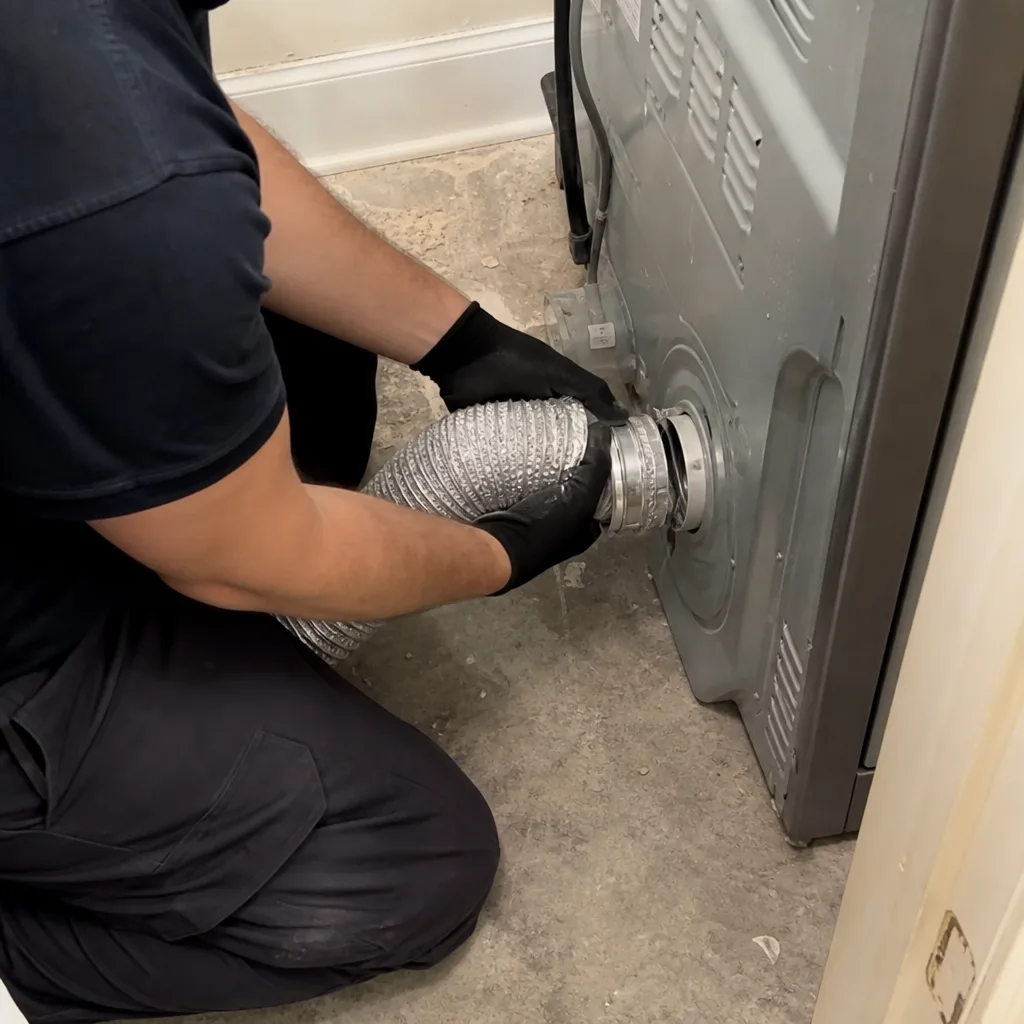
Call when you’ve documented one or more actionable signs: localized debris patterns with photographic evidence, persistent musty odor with zone-specific characteristics, measurable airflow drop on the tissue test, or post-renovation particles visible at registers. Bring your documentation. A competent technician should ask to see it.
Call when the issue is beyond diagnostic scope: water at registers, electrical or gas odors, or symptoms that don’t fit the patterns described here. These may indicate problems outside the duct system that require different expertise.
Call for a second opinion when a quote seems vague or the scope doesn’t match what you’ve observed. The Free Second Opinion at CleanRun Air Duct Cleaning Johns Creek puts a written estimate next to any competitor’s quote, line item by line item, so you can compare actual scope rather than headline price. For more guides & resources on evaluating service quotes, visit our blog.
CleanRun Air Duct Cleaning Johns Creek offers free estimates in Johns Creek. Every estimate includes a written scope and price before any work starts, every job concludes with a Documented Photo Record of every duct run, and every project is backed by the 365-Day Done Right Promise. Call (470) 326-1926 to schedule.
Frequently Asked Questions
Whole-system duct cleaning for a typical 2,400-square-foot home in Johns Creek ranges from $800 to $1,600, depending on system size, access difficulty, and whether the plenum and main trunk require attention. Single-branch cleaning for localized contamination runs $400-$700. CleanRun provides a written price before any work starts under Haven Standard Clause 1; no per-vent pricing, no add-ons after arrival. Call (470) 326-1926 for an exact quote based on your system layout.
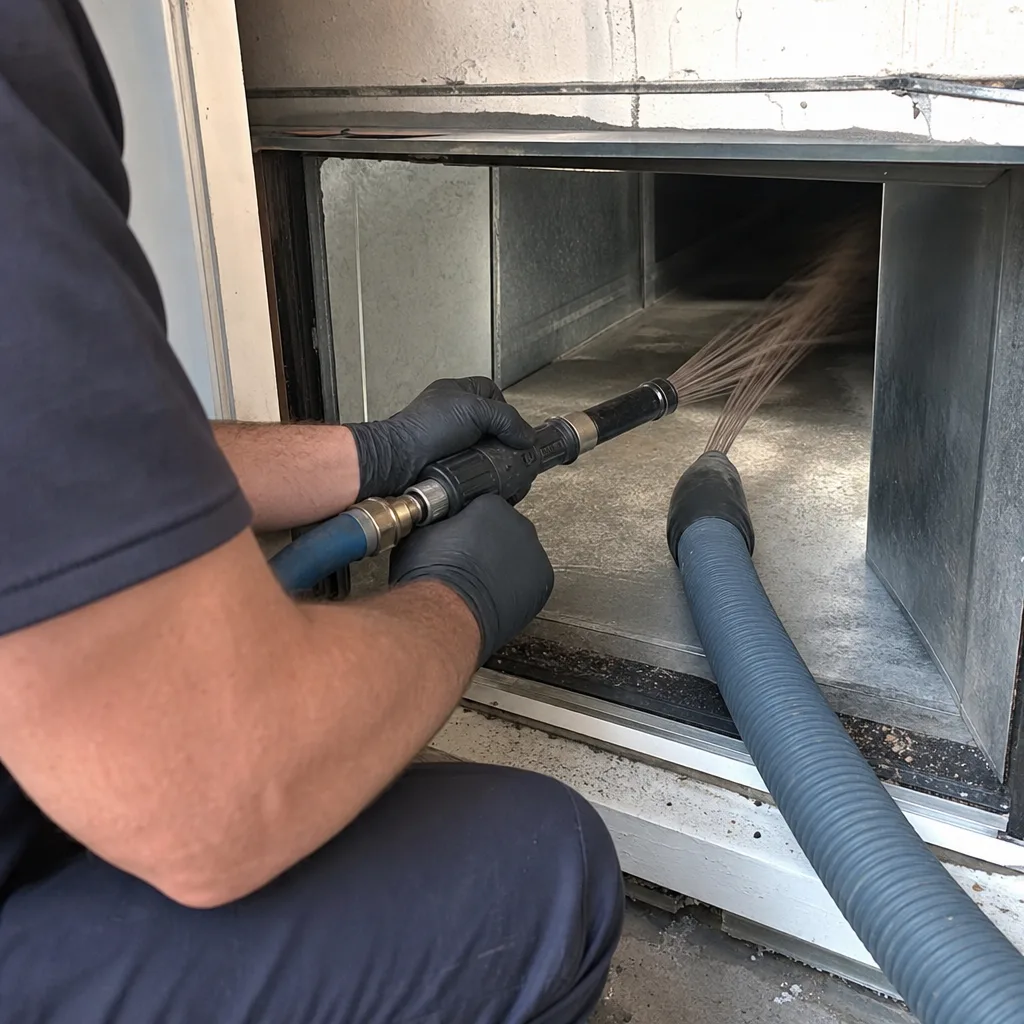
The $199-$299 “whole house” quotes typically cover register surface vacuuming and a cursory main trunk pass, without camera inspection, without photo documentation, and without plenum access. The equipment is often a shop vacuum with a long hose, not negative-pressure extraction with HEPA filtration. The real work, if done properly, requires 3-4 hours for a typical home with Rotobrush or Nikro equipment, plus the documented photo record. A quote that doesn’t specify scope in writing leaves room for the upsell. Always compare line-item scope, not headline price.
Demand a photo record of every duct run, before and after, delivered as part of the standard job record. CleanRun has provided this on every job since 2013; it’s Haven Standard Clause 4. The photos should show the interior duct surface, not just the register opening. If a contractor cannot or will not provide this, the work is unverifiable. The 365-Day Done Right Promise adds recourse if the documentation doesn’t match the outcome.
For Johns Creek homes with proper filtration and no renovation or pest events, every 5-7 years is adequate. Homes with pets that shed heavily, occupants with severe allergies, or recent construction may need cleaning at 3-4 year intervals. Annual cleaning is unnecessary absent a specific contamination event; it’s maintenance theater, not evidence-based service. Monitor your filters and run the tissue test annually; let the results guide timing, not the calendar.
The humid subtropical climate creates conditions that accelerate biological growth if moisture enters the duct system, but it does not inherently make ducts dirtier. The 72% average summer humidity means that any duct surface below the dewpoint will condense moisture; if that surface has particulate loading, growth can establish within 72 hours. Proper insulation, sealed ductwork, and correct refrigerant charge prevent this. Climate is a risk factor, not a destiny.
Duct cleaning addresses the distribution network: supply and return ducts, registers, grilles, plenum, and trunk lines. HVAC Cleaning in Johns Creek addresses the air handler components: evaporator coil, blower assembly, drain pan, and cabinet interior. The two services overlap at the plenum but target different systems. Coil cleaning without duct cleaning solves odor but leaves debris in the distribution path. Duct cleaning without coil cleaning solves distribution debris but leaves the odor source. For complete system restoration, both are typically required.
The Bottom Line
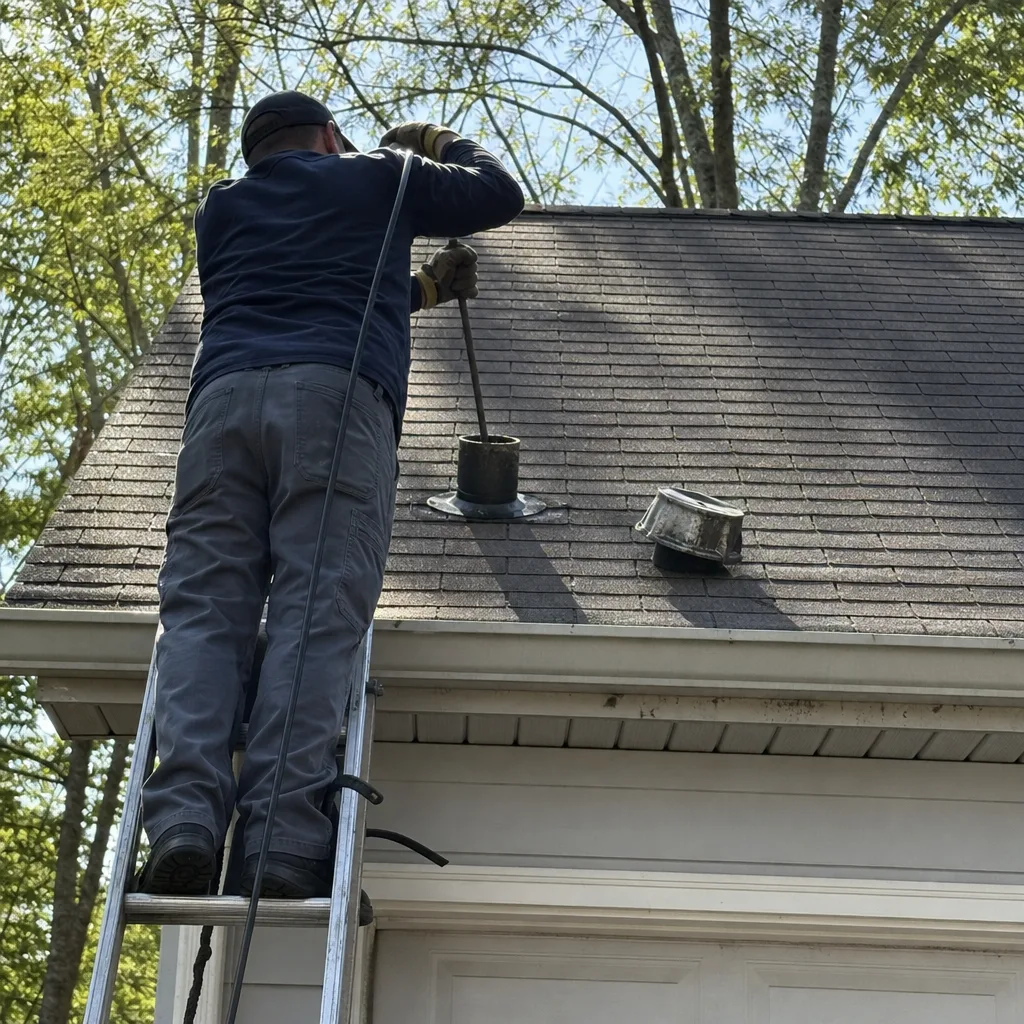
Register dust is normal. Musty odor requires diagnostic precision before any work is scoped. Post-renovation debris has distinct particle characteristics that justify cleaning. Airflow testing with a tissue and timer reveals duct integrity problems that visual inspection misses. And every actionable warning sign should be documented with photographs before a contractor is called, so the scope of work can be verified against what was actually found.
The Johns Creek homeowners who spend wisely on duct maintenance are those who distinguish baseline behavior from genuine anomaly, who demand written scope and price before work starts, and who verify results with photographic evidence. The industry runs on opacity; your protection is documentation.
CleanRun Air Duct Cleaning Johns Creek has served this market since 2013 with equipment from Rotobrush, Nikro, Abatement Technologies, Honeywell, Aprilaire, and Guardsman, background-checked and uniformed technicians under the H.A.V.E.N. Standard, and the documented accountability of the 365-Day Done Right Promise on every job. For a free estimate with written pricing before any work starts, call (470) 326-1926.
Written by Tomas Reyes, Owner at CleanRun Air Duct Cleaning Johns Creek, serving Johns Creek since 2013.