
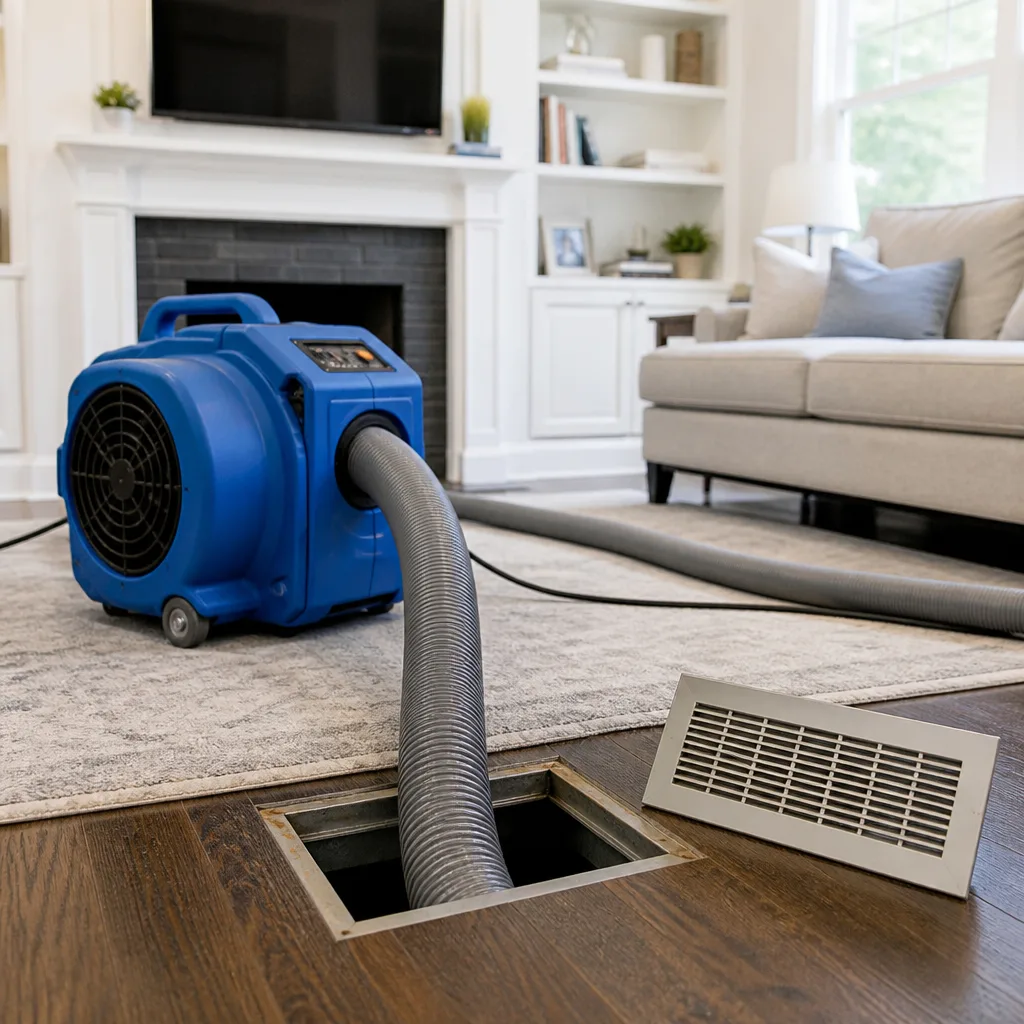
Whole-system duct and dryer vent check with before-and-after photos - you see exactly what came out of your vents
That "$99 whole-house special" is a bait ad - the real number appears once they are in your hallway, or the "clean" is a shop-vac at the register. We photograph the inside of your ducts before and after instead.
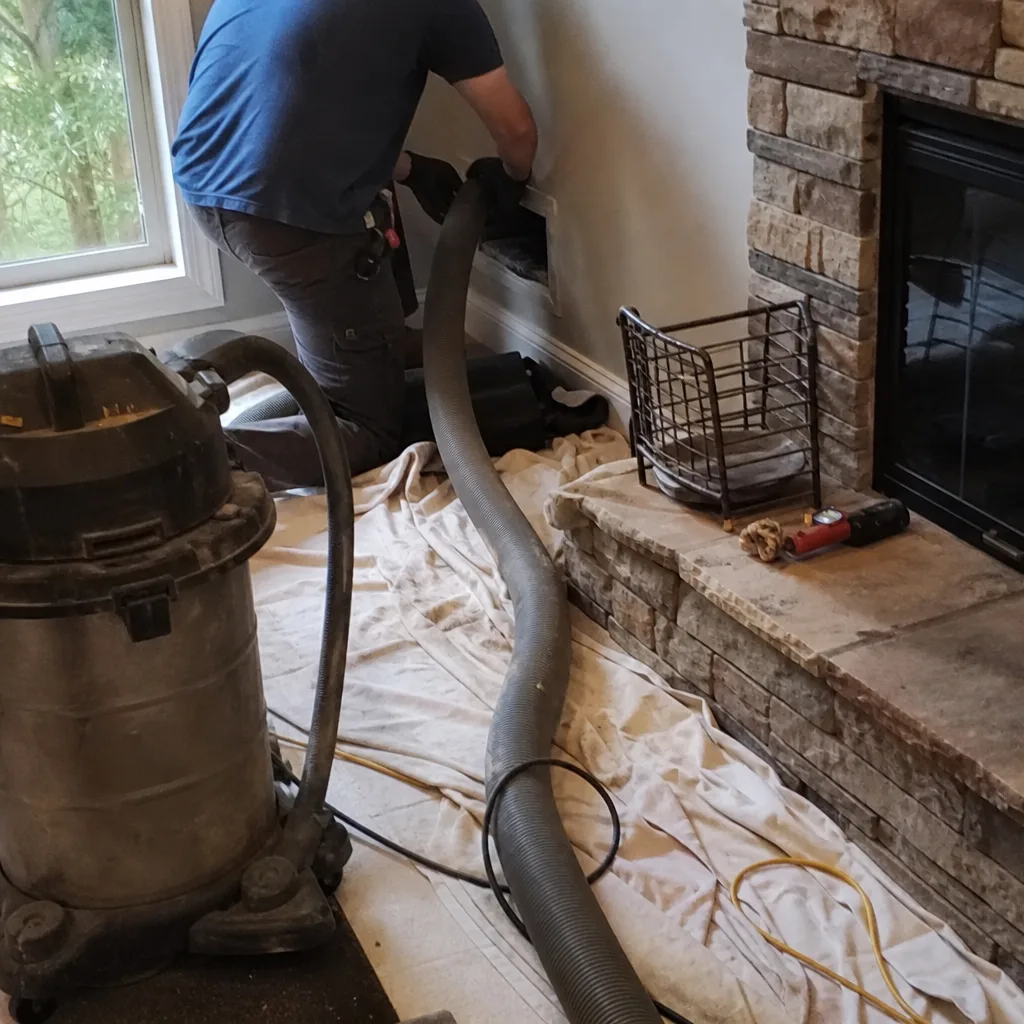 Before
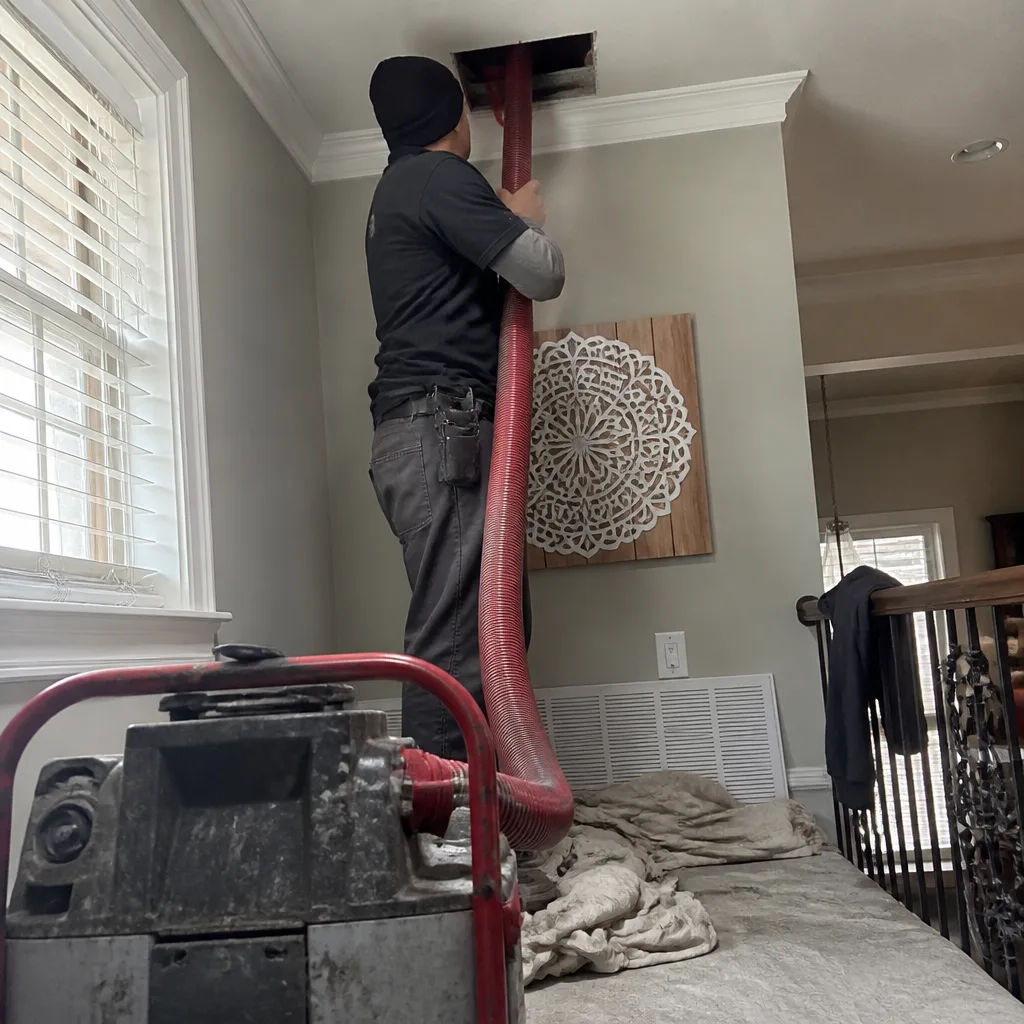 After
After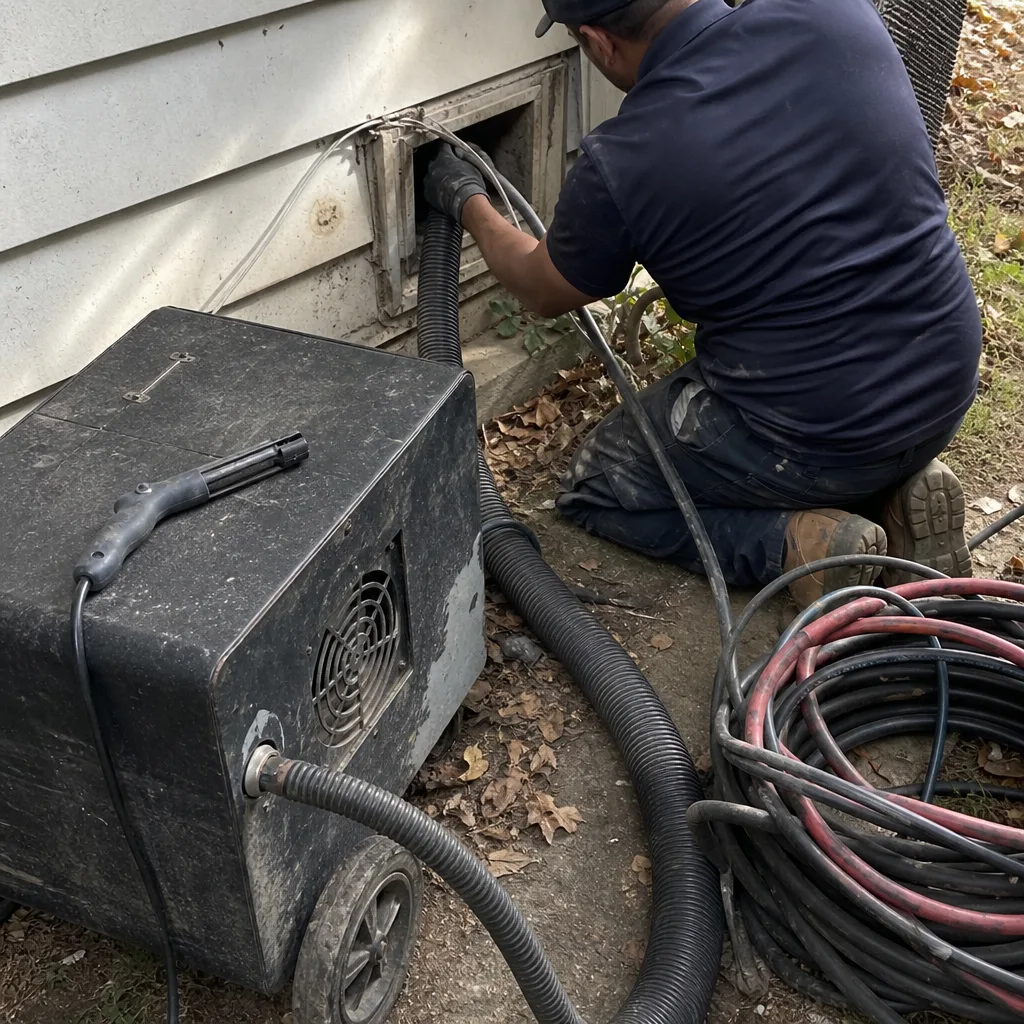 Before
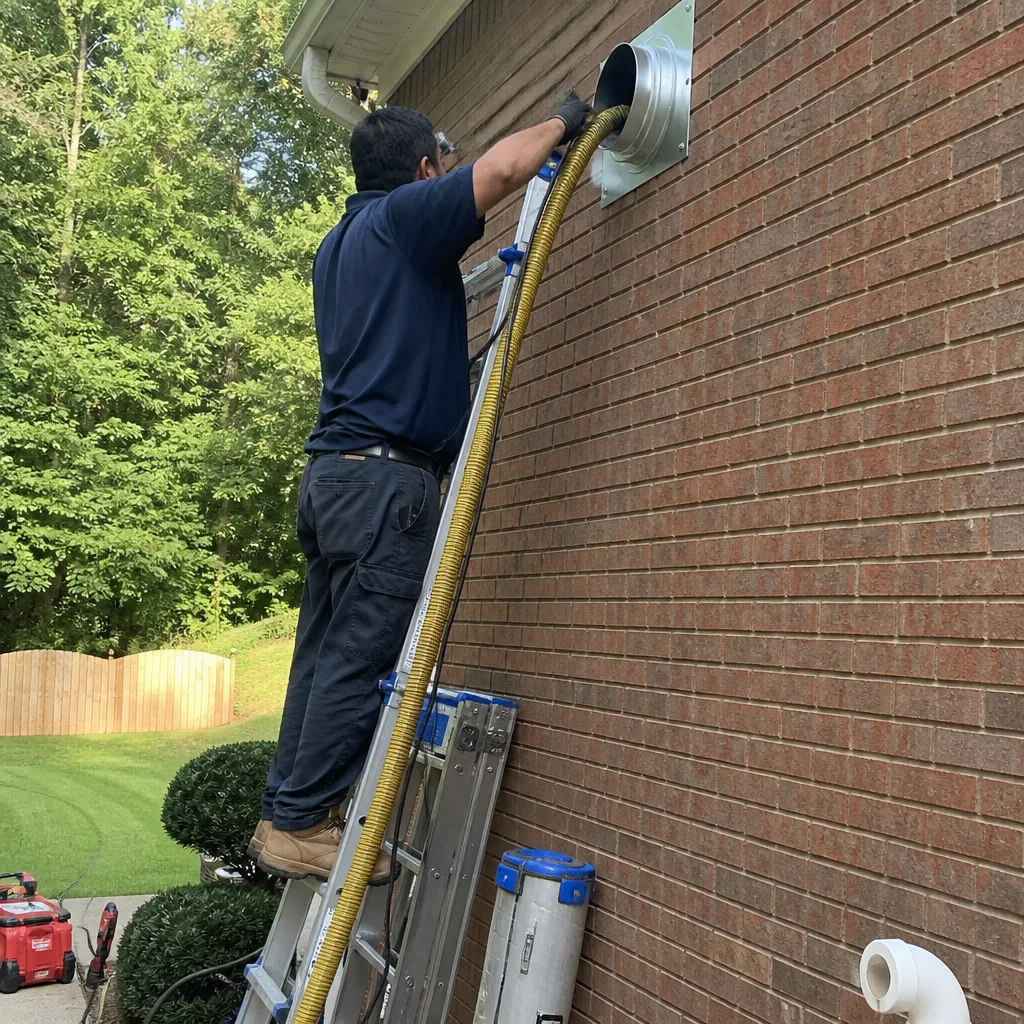 After
After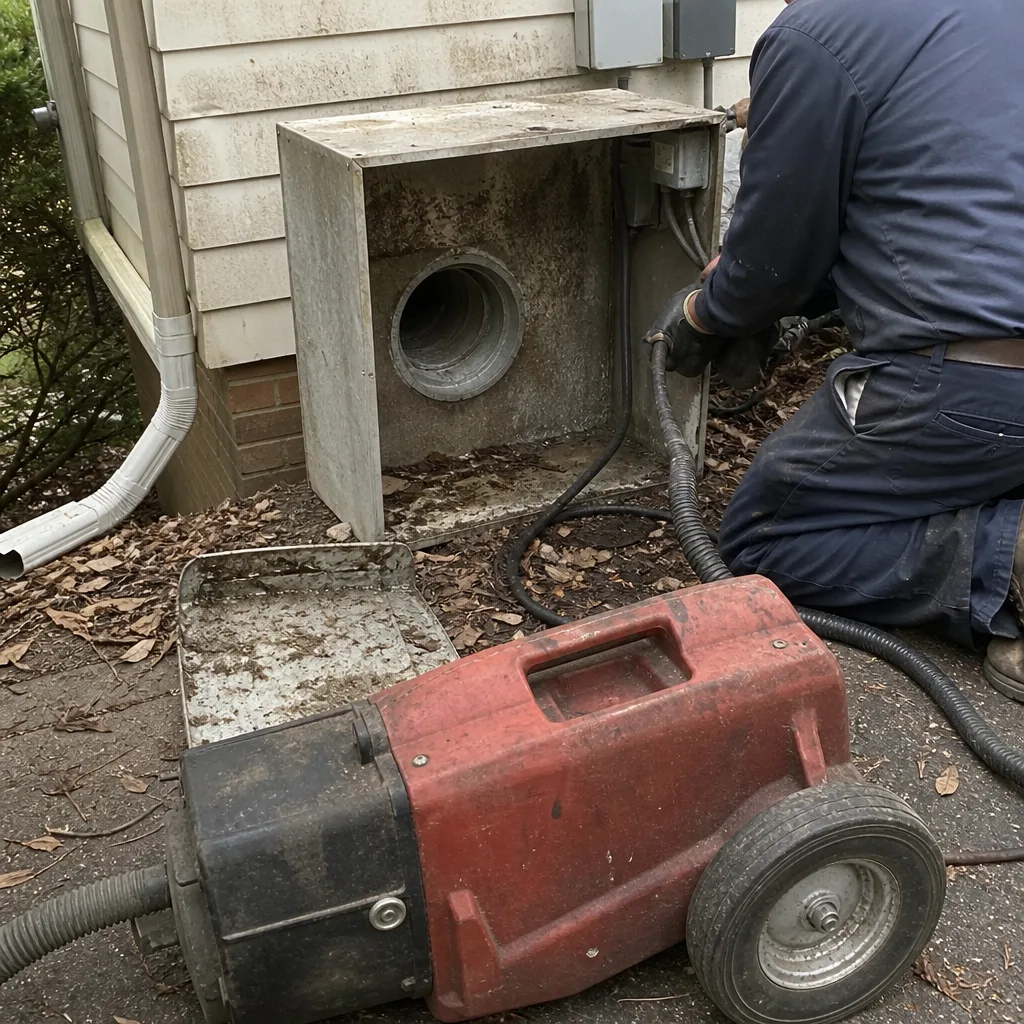 Before
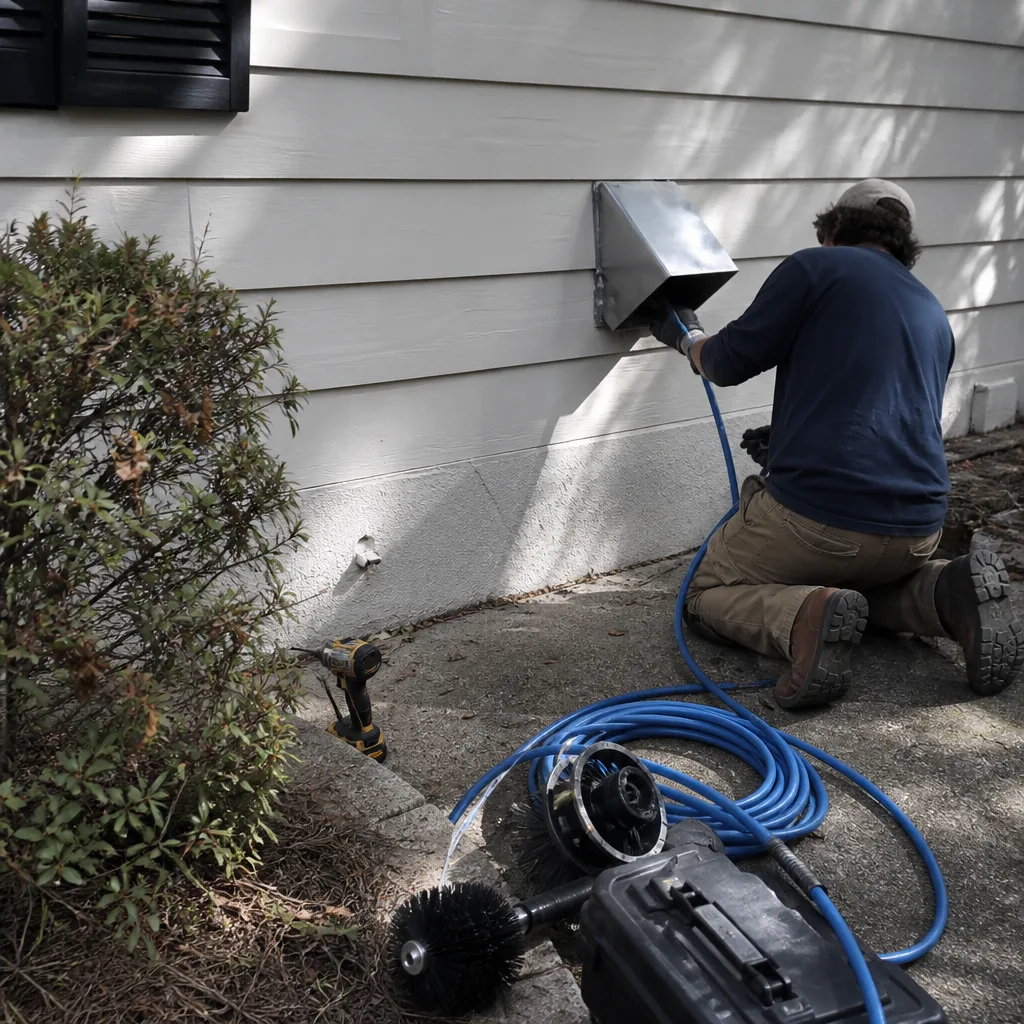 After
AfterDryer Vent Inspection in Johns Creek, GA
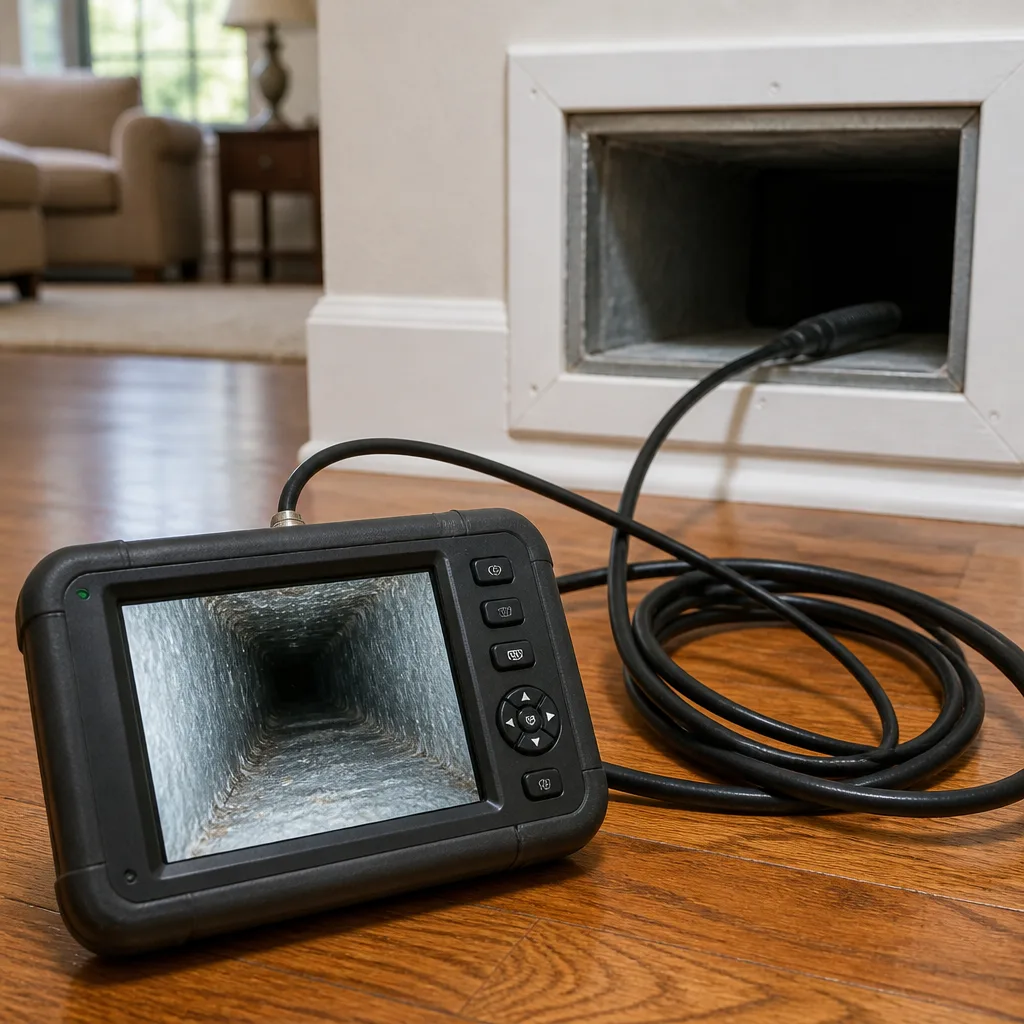
A dryer vent inspection in Johns Creek typically runs $79-$149 as a standalone service, and it’s the step that tells you whether your vent line is clear, correctly routed, and safe to run before any cleaning or repair work is quoted. CleanRun Air Duct Cleaning Johns Creek uses a flexible camera scope to photograph the full duct run from the dryer collar to the exterior termination cap, so the condition of your vent is documented – not estimated – before any price for further work is written. If you’d like to schedule one, call us at (470) 326-1926.
Most Johns Creek homeowners we hear from describe the same sequence: the dryer takes two cycles to dry a normal load, the laundry room feels warmer than it should, or a previous service company said the vent was “fine” without ever putting a camera in it. Those are the exact scenarios where a documented inspection changes the conversation. Our Dryer Vent Cleaning in Johns Creek service starts here – with a camera record of what’s actually inside, not a technician’s best guess based on airflow alone.
Tomas Reyes has led CleanRun since 2013. In that time the company has documented inspections on more than 52,000 homes across the metro area, every one with a written price delivered before any panel comes off and a photo record handed to the homeowner when the crew leaves. That’s not a marketing position – it’s a documented operational standard written into the H.A.V.E.N. Standard that governs every job we run.
When You Need a Dryer Vent Inspection
There’s no hard rule on inspection frequency, but certain conditions make it a practical necessity rather than a maintenance checkbox. Below are the situations we see most often in Johns Creek homes that warrant a camera inspection before anything else happens.
- Drying cycles are running long. If a normal cotton load takes 45-60 minutes instead of the usual 30, restricted airflow inside the duct run is the most common explanation. In Johns Creek’s older subdivisions along Medlock Bridge Road, we regularly find duct runs that were installed with two or three 90-degree elbows where one would have been sufficient – each elbow adds resistance and becomes a lint collection point.
- The exterior termination cap isn’t opening during a cycle. Walk outside while the dryer runs and watch the flap. If it stays mostly closed or barely moves, air isn’t moving through the duct the way it should. The camera will show us whether the blockage is near the cap, at an elbow mid-run, or at the collar behind the machine.
- Your laundry room or utility closet runs noticeably hot. Heat that can’t exit through the duct stays in the room. In the summer months, Johns Creek homes with second-floor laundry closets – a common layout in the Encore and Country Club of the South neighborhoods – can see laundry room temps climb into the mid-90s when the vent line is even partially blocked.
- You’ve never had the vent inspected since buying the home. If you purchased your Johns Creek home between 2015 and 2024 and the previous owners’ maintenance records are incomplete, there’s no reliable way to know the duct condition from the outside. A camera inspection produces a baseline photo record you can compare against future inspections.
- A pest or bird has been nesting near the exterior cap. Johns Creek has a dense tree canopy, particularly in the Shakerag and Medlock Bridge areas, and birds take advantage of improperly screened or damaged termination caps. A nest doesn’t have to fully block the duct to create a fire risk – compressed organic material catches and holds lint, and the camera shows exactly where it is.
- You’re getting a written estimate from another company and want a second opinion. CleanRun offers a free second opinion on any written estimate. If a competitor has quoted you duct replacement or a major cleaning without showing you camera images of the duct interior, an independent inspection is the straightforward way to verify whether the scope is accurate.
Our Dryer Vent Inspection Process
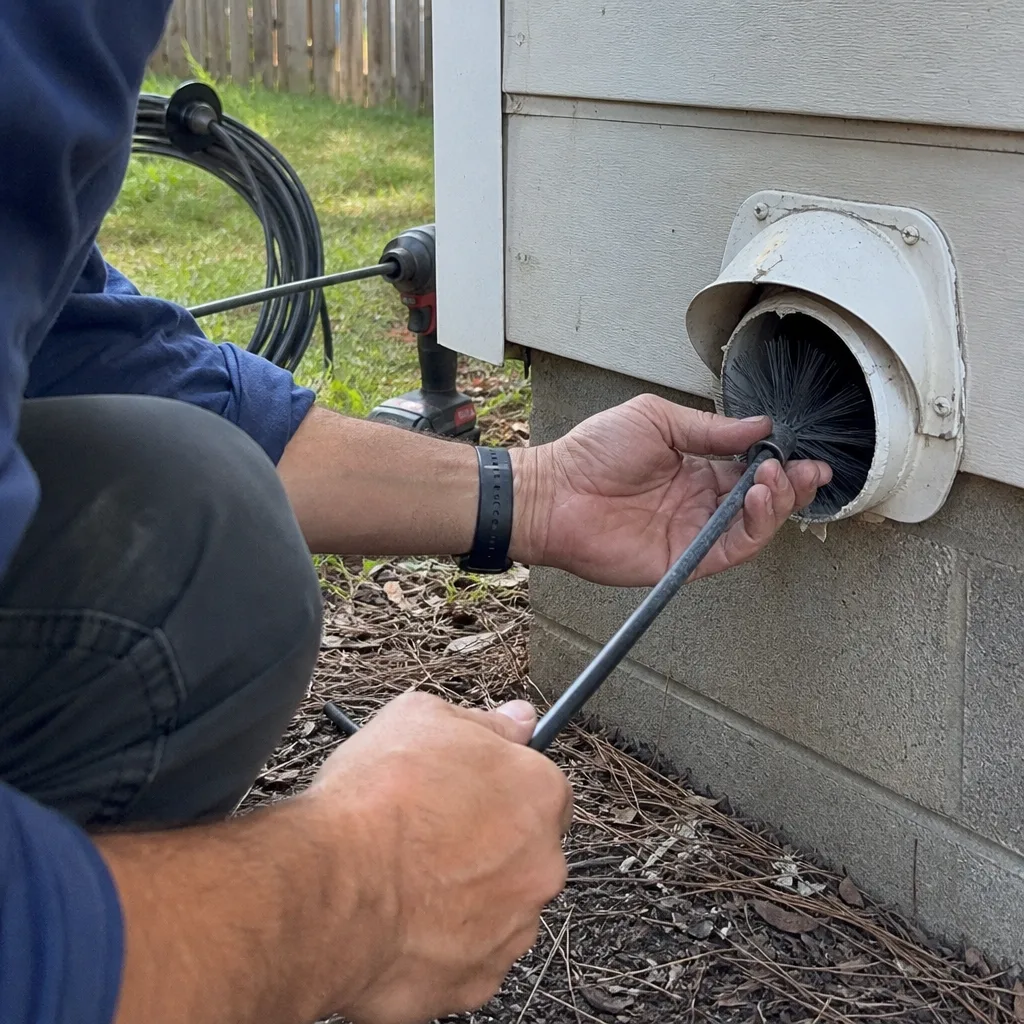
The inspection follows a fixed sequence. Each step below produces a specific output – either a photograph, a measurement, or a written finding – so the customer has documentation, not just a verbal report. This process is the same whether we’re looking at a single-story ranch in Abbotts Bridge or a three-story townhome in Johns Creek’s Technology Park corridor.
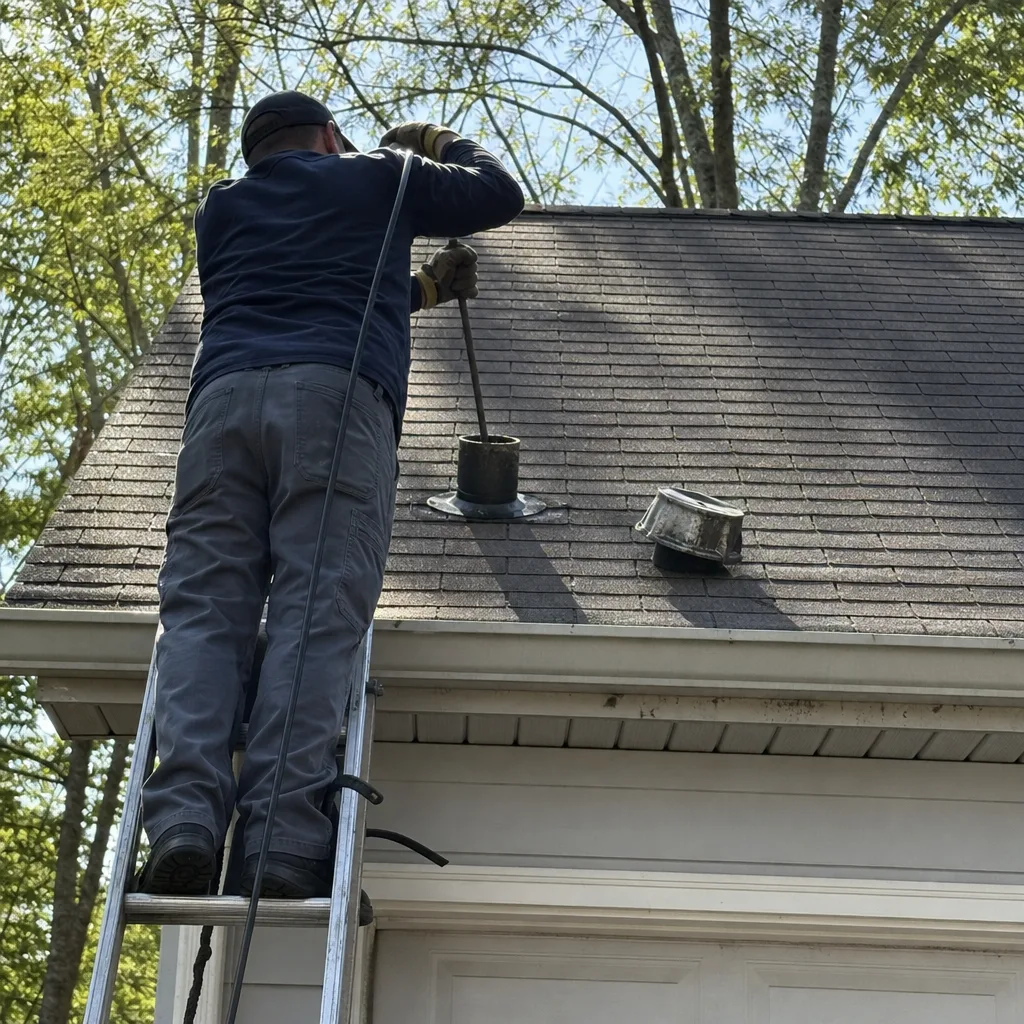
- Exterior cap assessment and measurement. We start outside at the termination point. The cap is photographed, the flap is tested manually, and we measure the opening diameter. Georgia’s residential building code requires a 4-inch minimum duct diameter for dryer vents, and caps that have been painted over, improperly screened, or damaged by weather are flagged in the written report before the camera goes in.
- Camera scope insertion and full-run documentation. A flexible inspection camera – the same camera equipment used in our Rotobrush-based cleaning process – is inserted at the exterior cap or the dryer collar, depending on access. Every foot of the duct run is photographed. Lint accumulation depth, duct material (foil flex, semi-rigid metal, or solid rigid metal), elbow radius, and any visible crimps or sags are recorded. This is the photo record delivered to the homeowner at job’s end.
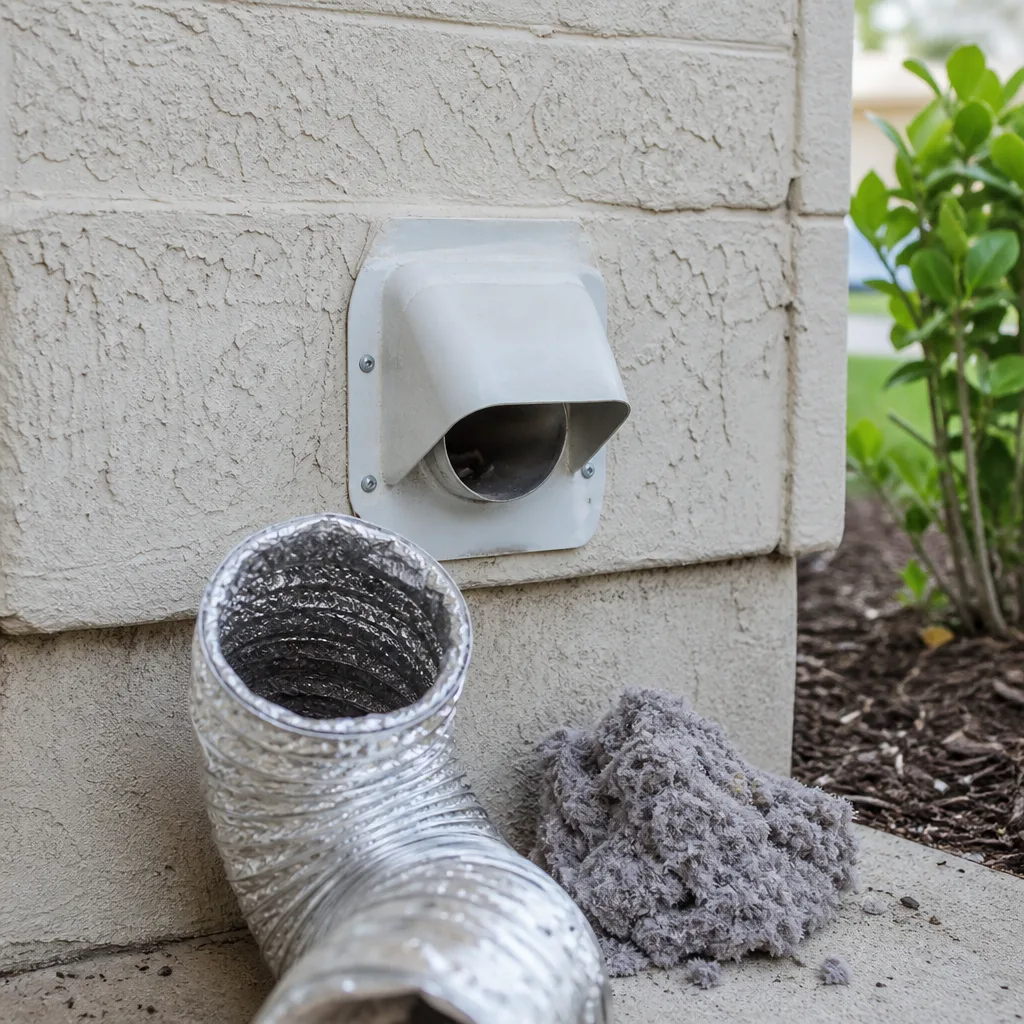
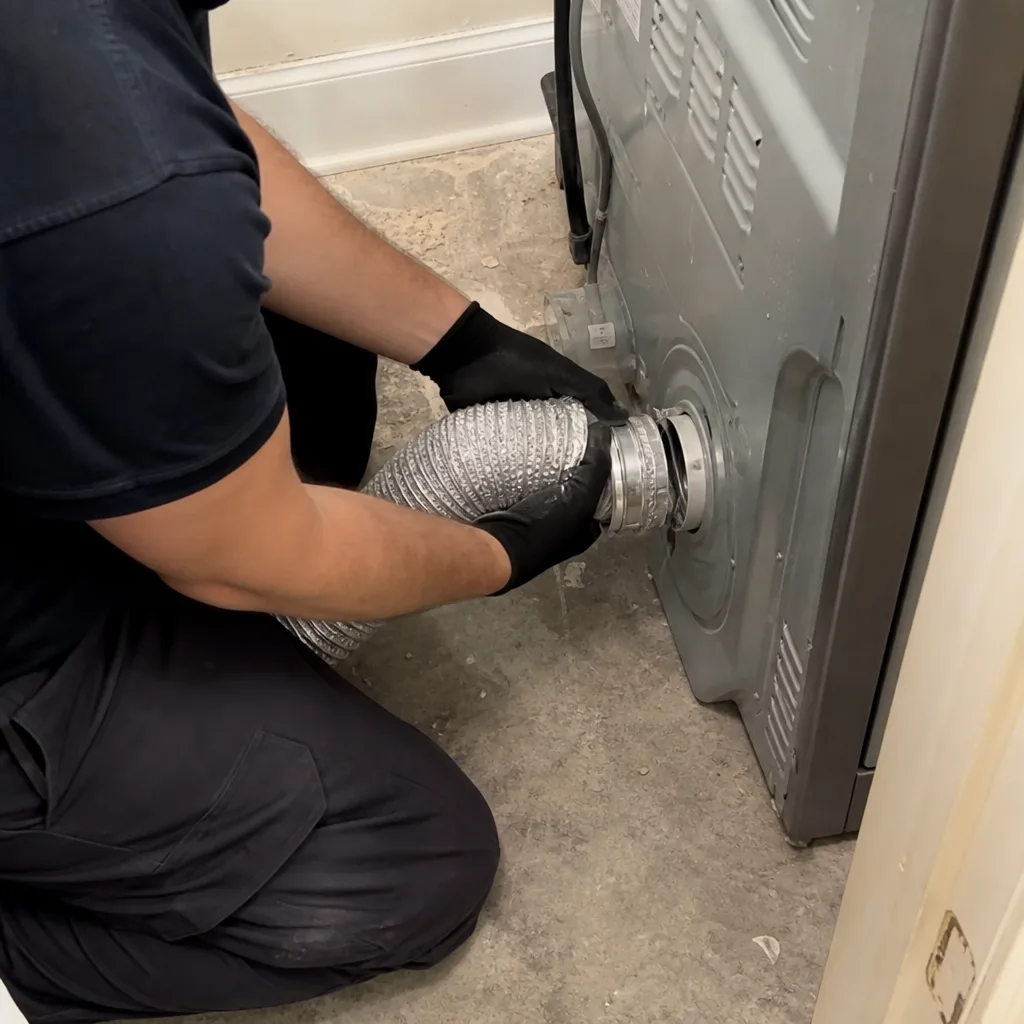
- Transition duct inspection at the dryer connection. The short flexible section connecting the dryer to the wall duct is inspected separately. This section is frequently overlooked and is where we find the highest rate of problems – including foil accordion flex that has been crushed behind the machine, improper materials like vinyl duct that don’t meet current code, and loose clamp connections that let humid air exhaust directly into the wall cavity.
- Airflow measurement and pressure differential check. We measure airflow velocity at the termination cap using an anemometer. The reading gives us a baseline to compare against manufacturer specifications for the dryer model in use and against post-cleaning readings if cleaning follows. A significant pressure differential between the dryer collar and the cap exit is the clearest indicator of restriction location.
- Written findings report and upfront price for any recommended work. Under Haven Standard Clause 1, no work beyond the inspection itself is ever started without a written price that the customer has reviewed and agreed to. The inspection report names the specific findings – “3.2-inch lint accumulation at the first elbow, 8 feet from the dryer collar” rather than “your vent needs cleaning” – and any follow-on price is written against those specific findings, not a general service category.
- Photo record delivery. The before-photos from the camera scope are compiled and delivered to the homeowner as part of the standard job record. If cleaning or repair follows the inspection on the same visit, after-photos are added to the same record. The homeowner leaves with documented evidence of what was found and what was done – a practice CleanRun has held since the first job in 2013.
BeforeAfterDryer Vent Inspection Pricing in Johns Creek
A standalone dryer vent inspection in Johns Creek costs $79-$149, depending on duct length and access complexity. That price is written before the camera goes in – no adjustments after the fact. Below is a breakdown of what affects where your job falls in that range.
| Scenario | Typical Price |
|---|---|
| Standard single-story home, vent run up to 25 feet, easy exterior cap access | $79-$99 |
| Two-story home or townhome, vent run 25-40 feet, one or two elbows | $99-$129 |
| Complex run over 40 feet, multiple elbows, roof termination, or restricted access panel | $129-$149 |
| Inspection bundled with a full dryer vent cleaning (same visit) | Inspection fee credited toward cleaning price |
If the inspection is scheduled alongside a full Dryer Vent Cleaning in Johns Creek, the inspection fee is credited toward the cleaning price – we don’t charge it as a separate line item when both services happen on the same visit. Dryer vent cleaning in Johns Creek runs $149-$299 depending on run length, material type, and whether a booster fan or cap replacement is needed. That price is written before cleaning starts, every time.
If you have a written estimate from another company, bring it. CleanRun will put its own number next to it in writing at no charge – that’s the free second opinion available on any written estimate, with no commitment required on your end.
Call (470) 326-1926 to schedule. A live person answers every call.
What the Camera Actually Shows: Common Findings in Johns Creek Homes
Johns Creek’s housing stock is heavily weighted toward construction from the late 1990s through the mid-2010s. That era produced some consistent duct installation patterns that show up on the camera regularly.
The most common finding in Abbotts Bridge and Medlock Bridge area homes is foil accordion flex for the full duct run rather than just the transition section behind the dryer. Foil flex was an accepted installation material for years, but it corrugates internally – every ridge traps lint – and it doesn’t have the structural rigidity to hold its shape after a few years of thermal cycling. By the time the camera gets inside a 15-year-old flex run, the interior walls frequently show lint accumulation in the ridges at a depth that reduces the effective duct diameter by 30-40%. The dryer still runs, the lint still moves, but it moves slowly, and the fine particulate that escapes the lint trap builds up at every ridge over years of use.
In the Shakerag area and the newer construction near Johns Creek City Hall, we see a different pattern: rigid metal duct that was installed correctly but with too many elbows to fit the route to the exterior wall. Each elbow adds equivalent length to the system – a standard 90-degree elbow in a 4-inch duct adds roughly 5 feet of equivalent length for airflow resistance purposes. A duct run with four elbows over 20 physical feet is behaving like a 40-foot run from the dryer’s perspective. The camera finds the lint sitting at those elbows because that’s where velocity drops enough for it to fall out of suspension.
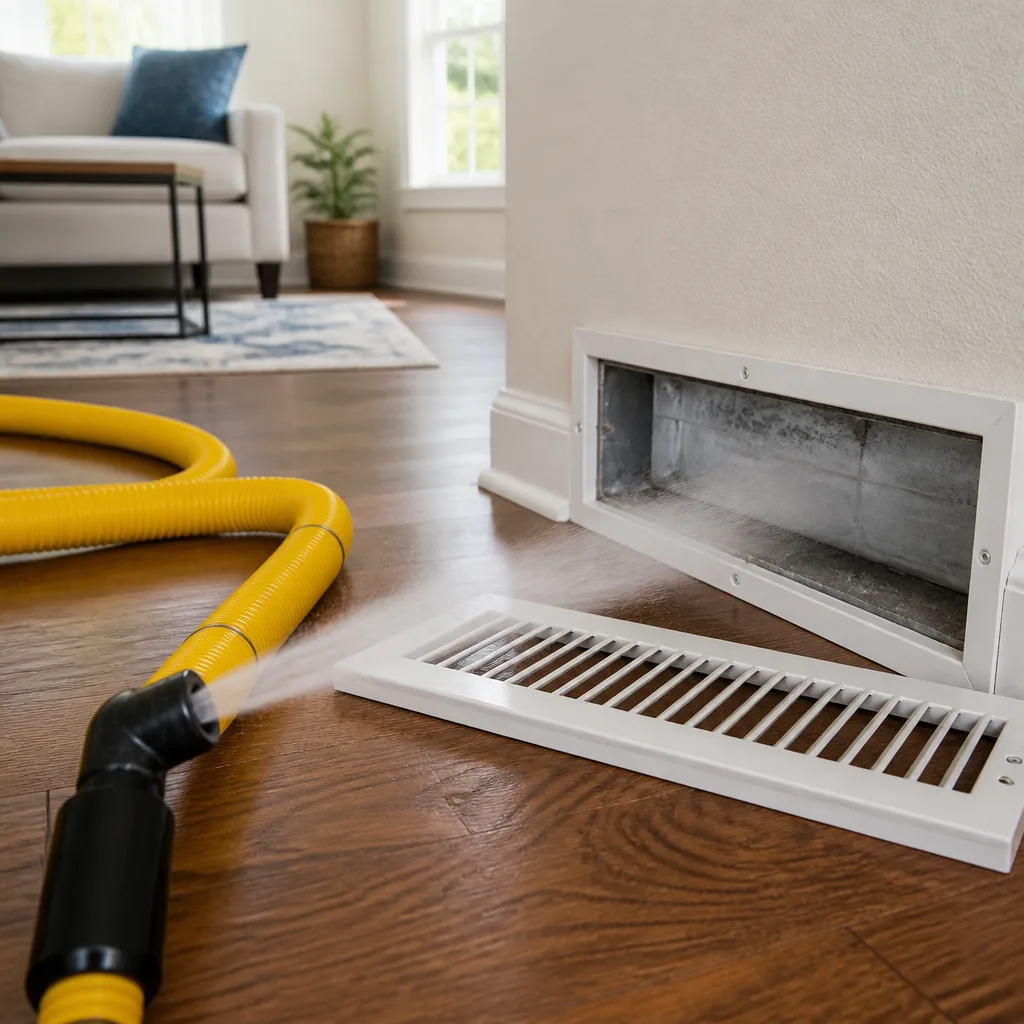
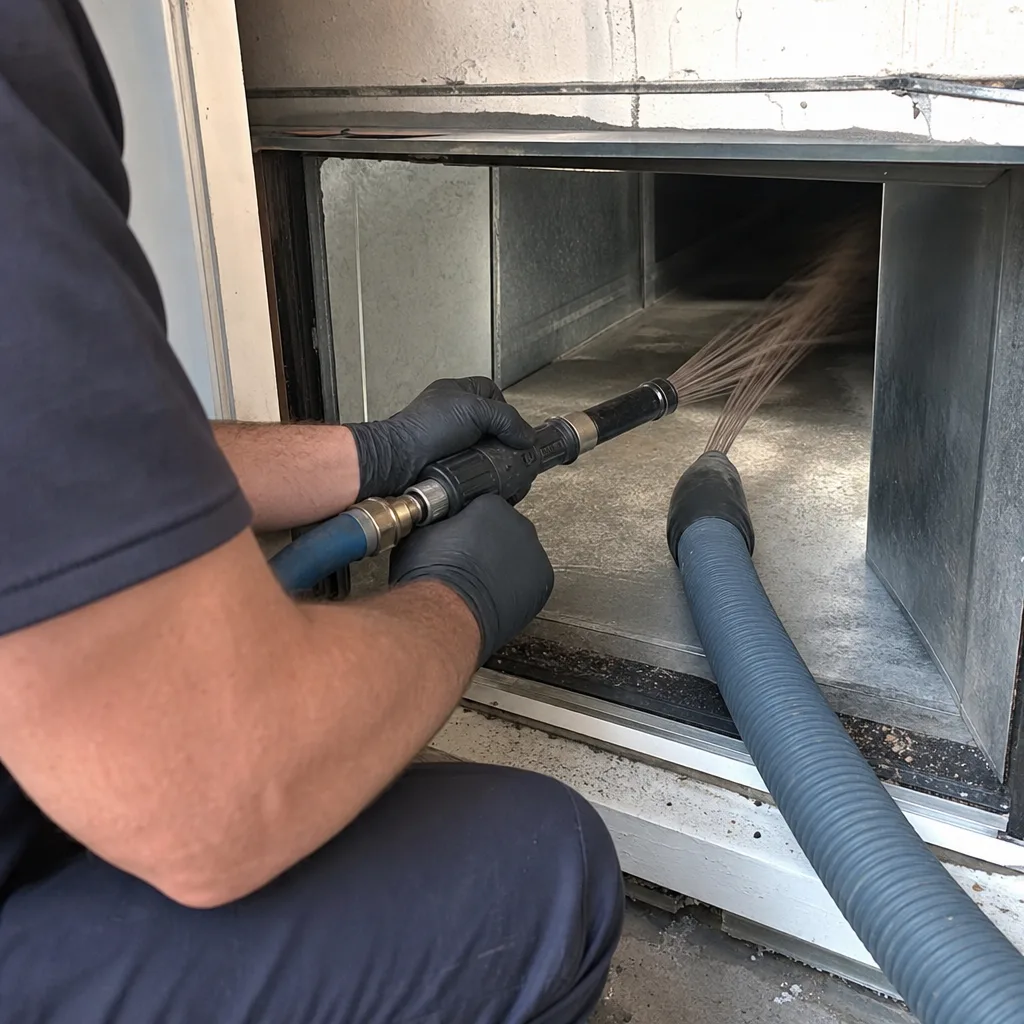
Nikro-standard negative-pressure extraction equipment is what we use when Dryer Vent Cleaning services follow an inspection, and the reason that matters is that the camera images taken before extraction and after extraction show a measurable difference in the duct walls – one that foil flex alone, regardless of how many times a shop vac is run through, cannot fully achieve. The photo record is the evidence that the work actually happened the way it was described.
Safety Note on Dryer Vent Conditions
Dryer vent blockages are a documented fire cause. The U.S. Fire Administration attributes roughly 2,900 home dryer fires annually to failure to clean the dryer vent – lint is highly combustible, and a blocked duct that forces hot exhaust to linger in the duct interior creates conditions where ignition is possible. If the camera finds a significant blockage, a damaged duct with gaps exhausting into a wall cavity, or a duct terminating in a confined space rather than outside, those findings are written up immediately and flagged as conditions that should be addressed before the dryer is run again. We won’t pressure you into same-day work, but we will put the finding in writing so you have a record of what the camera showed.
Homeowners who attempt to clear a blocked dryer vent using improvised tools risk compressing blockages further into the duct or damaging flex sections. If a blockage is found on inspection, Vent Cleaning by a technician with the right extraction equipment – not a leaf blower or a shop vac pushed in from the outside – is the appropriate next step.
Why CleanRun for Dryer Vent Inspection in Johns Creek
The short answer is documentation. Most dryer vent services in the Johns Creek area involve a technician running a brush through the duct and telling you it’s clean. CleanRun puts a camera in before anything is done and hands you photos when it’s over. You can see what the duct looked like before and after, the findings are in writing, and the 365-Day Done Right Promise means that if something wasn’t addressed correctly, it gets corrected – in writing, not at a manager’s discretion.
Tomas Reyes built CleanRun around the principle that a customer who can see the before photo doesn’t need to be sold on the service – the duct condition does that plainly. That’s what the H.A.V.E.N. Standard operationalizes: written prices, documented findings, verified crews, and a guarantee that travels with the job record.
CleanRun technicians are background-checked, arrive in uniform, and are identified by name before showing up at your door. Equipment used on Johns Creek jobs includes Rotobrush camera and cleaning systems and Nikro negative-pressure extraction – equipment that customers can look up and verify independently before agreeing to a price.
Key Takeaways
- Dryer vent inspection in Johns Creek is priced at $79-$149, written before the camera goes in.
- The inspection uses a flexible camera scope that photographs the full duct run – every foot, before and after.
- Common findings in Johns Creek homes include foil flex with corrugated lint accumulation and excess elbows in rigid metal runs.
- If cleaning follows inspection on the same visit, the inspection fee is credited toward the cleaning price.
- All findings are delivered in a written report with photos – you receive the documentation as part of the standard service.
- The 365-Day Done Right Promise backs every job in writing.
- A free second opinion is available on any written estimate from another company.
FAQs – Dryer Vent Inspection
How much does a dryer vent inspection cost in Johns Creek?
A dryer vent inspection in Johns Creek costs $79-$149, depending on duct run length and access. The price is written before the camera goes in – no adjustments once work starts. If cleaning is scheduled on the same visit, the inspection fee is credited toward the cleaning price. Call (470) 326-1926 for an exact written quote based on your home’s specific duct configuration.
How long does a dryer vent inspection take?
Most dryer vent inspections in Johns Creek take 30-45 minutes for a standard single-story home with a straightforward duct run. Homes with longer runs, multiple elbows, or difficult exterior cap access – common in multi-story homes in Encore and Country Club of the South – run closer to 60 minutes. The written findings report and photo record are delivered before the technician leaves.
Can you inspect and clean the dryer vent on the same visit?
Yes. If the inspection findings indicate cleaning is needed, we can complete the cleaning on the same visit and the inspection fee is credited toward the cleaning price. The written price for cleaning is presented after the inspection report is reviewed – you decide whether to proceed before any cleaning equipment is deployed. Call (470) 326-1926 to schedule an inspection with same-visit cleaning available.
How often should a dryer vent be inspected in Johns Creek?
Annual inspection is the standard recommendation for a household running four or more dryer loads per week, which is typical for a Johns Creek household of three or more people. Homes with longer duct runs, foil flex material, or a history of slow drying benefit from inspection every 12 months regardless of whether a full cleaning was completed the prior year. If you’ve never had a camera inspection done since purchasing your home, that’s the baseline to establish first.
Written by Tomas Reyes, Owner at CleanRun Air Duct Cleaning Johns Creek, serving Johns Creek.